



South Korea, China Secure 8 LNG Ship Orders Each This Month while Korea Aims for Tech Localization and China Leverages Cost Advantage
Korea and China are engaged in fierce competition from the beginning of the year over dominance in the global liquefied natural gas (LNG) carrier market. Both countries have already succeeded in securing orders for 8 LNG ships each this month. Korea plans to maintain its leading position through localization of core technologies. China’s strategy is to seize the top position by leveraging high price competitiveness and improved technological capabilities.
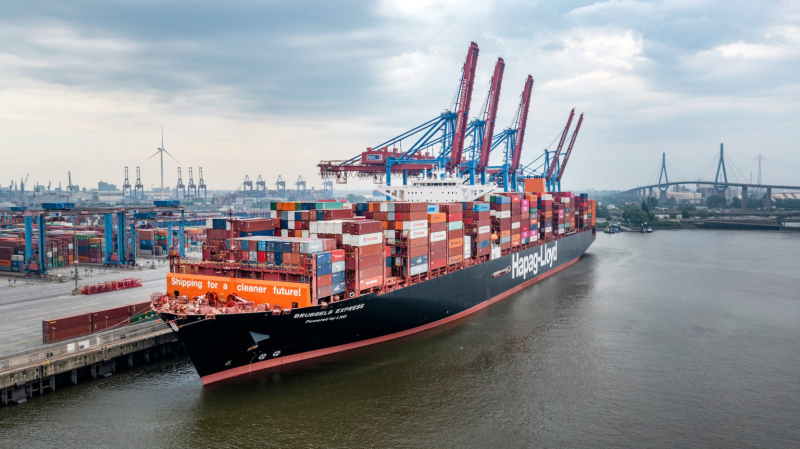
According to the shipbuilding industry on Feb. 2, Korea’s three major shipbuilders (HD Korea Shipbuilding & Offshore Engineering, Hanwha Ocean, and Samsung Heavy Industries) succeeded in securing orders for 8 LNG ships in December last tear. HD Korea Shipbuilding & Offshore Engineering was the first to sign a construction contract for 4 LNG ships with a shipping company in the Americas region. The contract value is 1,499.3 billion won (approximately $1,034 million). Hanwha Ocean and Samsung Heavy Industries each concluded construction contracts for 2 LNG ships. The contract values are 738.3 billion won and 727.2 billion won, respectively.
Chinese shipbuilders also secured orders for 8 LNG ships, not to be outdone. Hudong-Zhonghua Shipbuilding recently signed an LNG ship construction contract for up to 6 vessels with a Greek shipping company. The basic plan involves constructing 4 LNG ships, with an option to build an additional 2 LNG ships depending on circumstances. Eastern Pacific Shipping (EPS), a Singapore-based shipping company, placed orders for 2 LNG ships with Jiangnan Shipyard. Chinese LNG ships have emerged as an attractive option for global shipping companies, being 8% cheaper compared to Korean LNG ships.
Additionally, China’s Shandong Marine is discussing construction plans for 4 LNG ships with Jiangnan Shipyard. If negotiations are finalized, Chinese shipbuilders’ LNG ship order performance will increase to 12 vessels.
Korea maintains a clear advantage in the global LNG ship market. Last year, Korea’s market share was 86.6% based on Compensated Gross Tonnage (CGT). China recorded only 8.1%. Although China achieved a 42.8% market share in 2024, pursuing Korea (57.2%) within a 10 percentage point range, the gap widened again last year. The industry analyzes that the decrease in LNG ship orders from Chinese shipping companies, who prefer domestic shipbuilders, had a negative impact on China’s market share.
The LNG ship order competition between the two countries is expected to intensify further. This is because the prevailing analysis suggests that LNG ships will maintain solid demand amid mixed outlooks for the global ship market this year. As LNG demand increases due to eco-friendly trends and U.S. LNG projects, shipping companies seeking to expand their LNG fleet are growing in number. British shipbuilding and maritime analysis agency Clarkson Research forecasts that more than 115 LNG ships will be ordered this year.
The rivalry between the two countries is also expected to further fuel LNG ship competition. Korea has effectively ceded its leading position to China, which emphasizes cost-effectiveness, in container ships and Very Large Crude Carriers (VLCCs), despite its image as a shipbuilding powerhouse. In the global ship market last year, China recorded a 63% market share while Korea achieved only 21%. For Korea, LNG ships represent the last bastion of pride.
Domestic shipbuilders are accelerating the localization of LNG cargo tanks to solidify their leading position in the LNG ship market. The design technology for LNG cargo tanks, which are the core of LNG ships, is currently virtually monopolized by France’s GTT. If domestic shipbuilders succeed in localization, Korea’s position in the LNG ship market is expected to become more solid.
China plans to capture first place in the LNG ship market and emerge as a definitive powerhouse in the shipbuilding market. Although it is evaluated as having lower technological capabilities compared to Korea in the LNG ship sector, the reduced number of defect incidents compared to the past is considered a positive factor for China. An industry official said, “As China’s influence in the shipbuilding market grows, Korea cannot be guaranteed a secure leading position in the LNG ship market.”
The order competition between the two countries is also set to unfold fiercely in the VLCC market. The VLCC market is growing due to replacement demand for aging vessels. Korea Maritime Promotion Corporation recently forecast in a report that “the global tanker order volume outlook through next year will rise by an average of 10% and maintain high levels for a longer period than expected.”
The VLCC market is currently dominated by China, which emphasizes price competitiveness. However, domestic shipbuilders are also pursuing China by achieving significant recent performance. Notably, Hanwha Ocean secured orders for 3 VLCCs from a Middle Eastern shipping company last month.