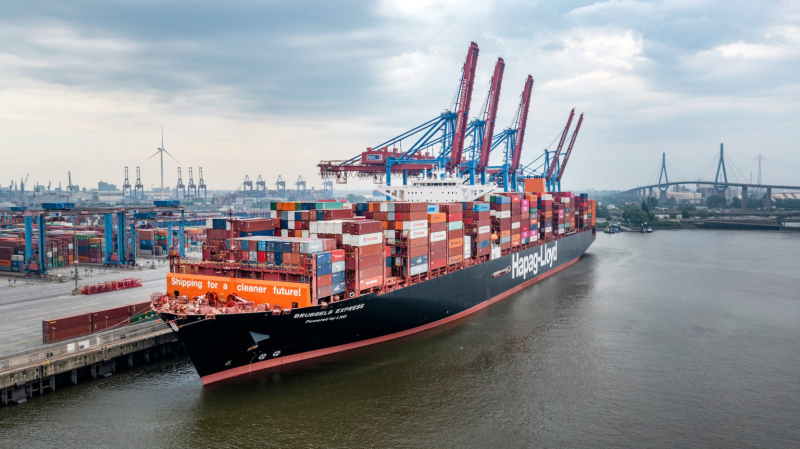







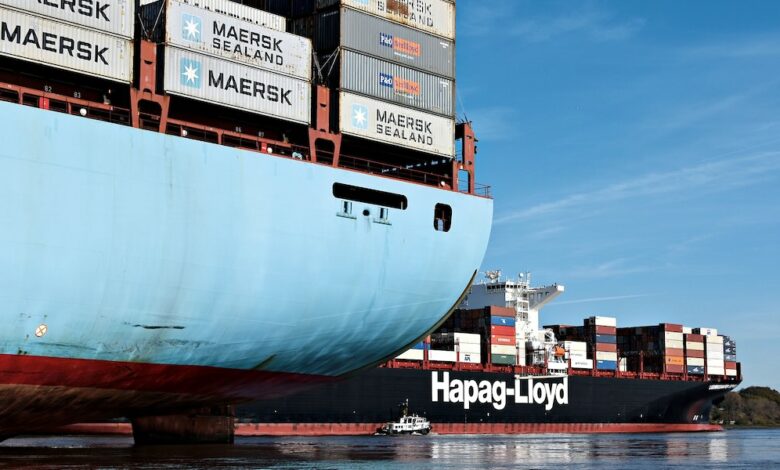
Maersk and Hapag-Lloyd are set to resume Red Sea transits on one of their shared Gemini Cooperation services, marking a cautious step back into the corridor after months of widespread diversions around the Cape of Good Hope.
The Danish and German carriers said the ME11 service, linking India and the Middle East with the Mediterranean, will be rerouted through the Red Sea and the Suez Canal. All sailings will be supported by naval protection.
The changes will take effect from mid-February, applying to westbound voyages from the Albert Maersk and eastbound sailings from the Astrid Maersk.
The partners said they may later apply similar routing changes to the AE12 and AE15 services, subject to conditions, with further updates to follow. No additional Red Sea-related changes to the Gemini network are planned at this stage.
Both carriers stressed that the move is being implemented to limit disruption to customers, while maintaining the Gemini Cooperation’s focus on schedule reliability.
Security remains a key consideration. Maersk and Hapag-Lloyd said the highest possible safety measures will be in place, with crew, vessel and cargo safety the top priority. Any further adjustments will depend on continued stability in the Red Sea and the absence of further escalation in the region.
The Gemini Cooperation, launched in February 2025, covers 29 shared mainline services and 29 shuttle services across East–West trades. Earlier this year, Maersk took its first structural step back into the Red Sea by rerouting its MECL service, which links the Middle East and India with the US east coast, via the Suez Canal. That decision followed trial transits by the Maersk Sebarok and Maersk Denver and formed part of a gradual return to the route.
The renewed caution comes amid continued security incidents in the wider region. This week, the US-flagged product tanker Stena Imperative was harassed in the Strait of Hormuz by two Iranian fast boats and a drone, with threats made to board and seize the vessel, according to US Central Command. US forces intervened and escorted the tanker clear of the area. Separately, US forces also shot down an Iranian drone after it carried out what were described as aggressive manoeuvres near the aircraft carrier USS Abraham Lincoln in the Arabian Sea.
Much of this year’s liner fortunes will depend on how quickly the industry returns en masse to transiting the Suez Canal.
A large-scale return to shorter sailing distances via the Suez Canal would effectively free up 6-8% of global container shipping capacity, according to data from Xeneta, a freight rate platform.
A recent report from Danish consultancy Sea-Intelligence showed the demand in Q3 of each year on the basis of a Red Sea opening in early 2026, followed by a three to four-month transition period of operational congestion, as well as assuming a general 3% demand growth globally in 2026.
In this case, Sea-Intelligence sees global demand in teu-miles decline by 12% in Q3 this year.