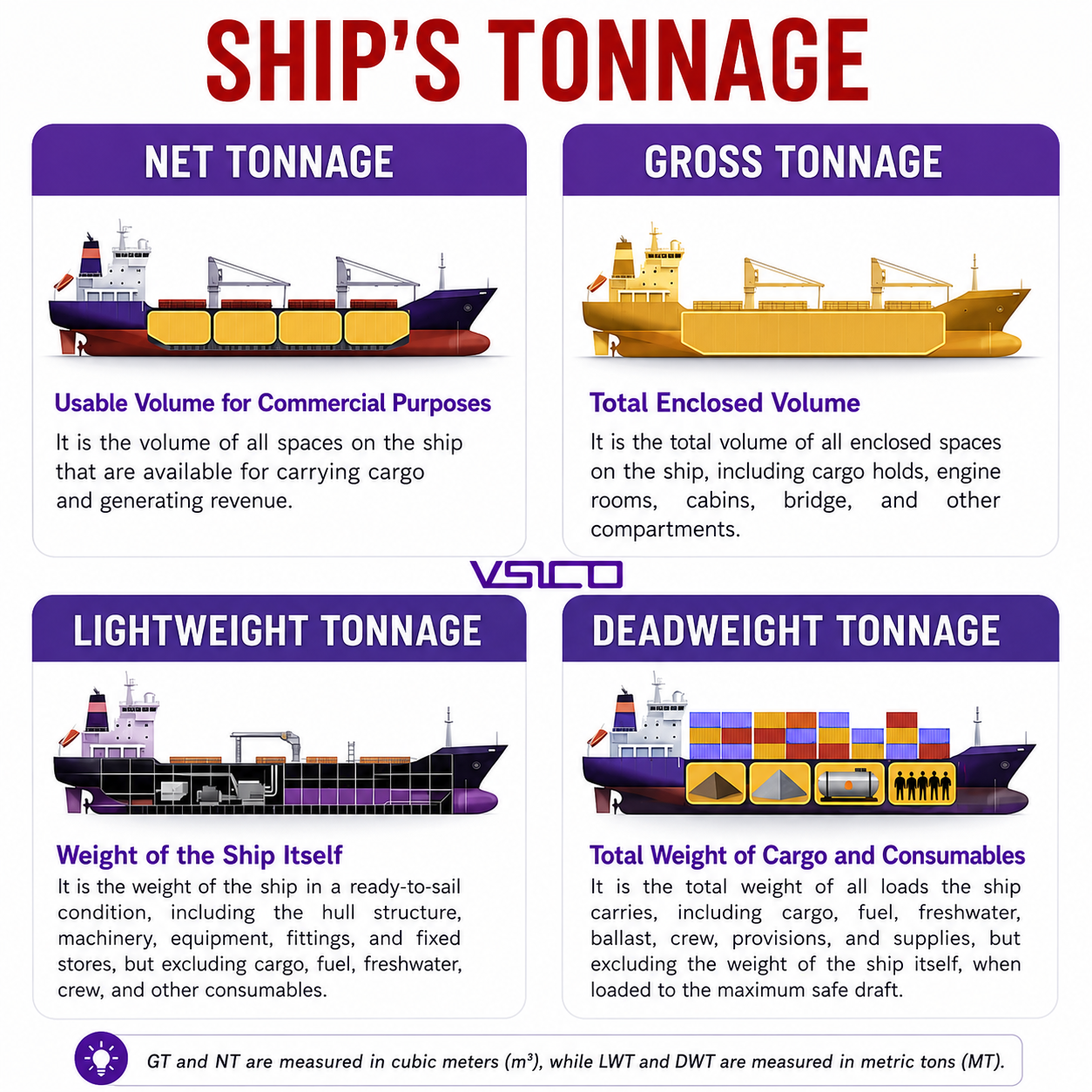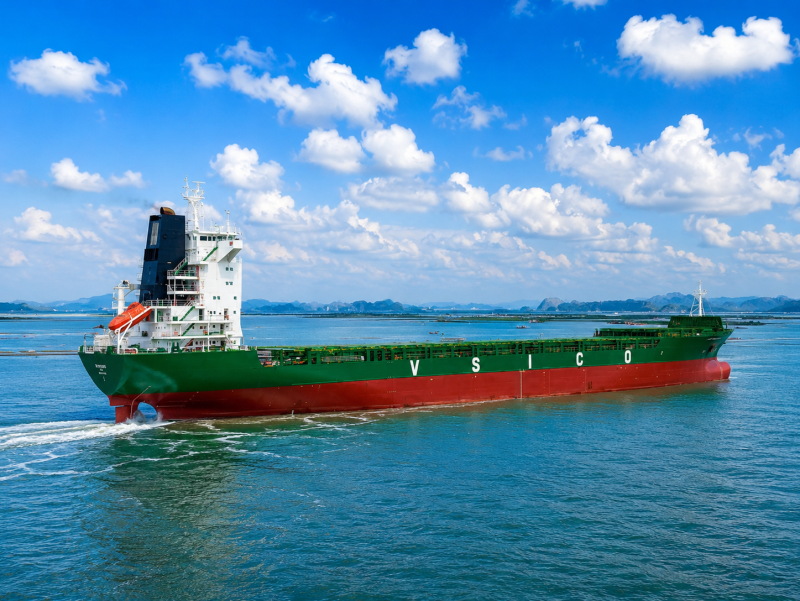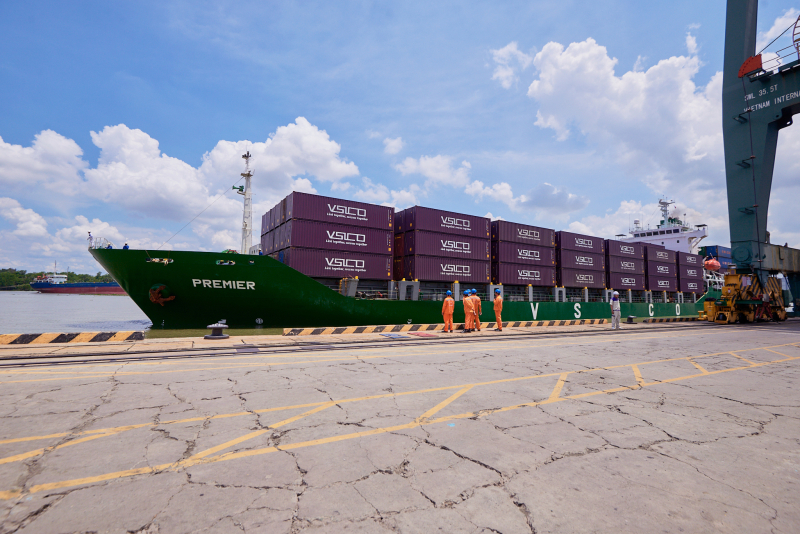







In the shipping industry, understanding “Tonnage” indicators correctly is essential for calculating port charges, taxes, and cargo handling capacity. Let’s take a look at the 4 core concepts:
🔹 Gross Tonnage (GT)
GT represents the total enclosed internal volume of a vessel, including cargo holds, engine rooms, cabins, bridge areas, and technical compartments.
This is not the ship’s weight, but an index reflecting the vessel’s overall size under international standards. GT is commonly used for ship registration, port dues, pilotage, tugboat fees, and international regulations such as SOLAS, MARPOL, and ISM. The larger the GT, the larger the vessel is considered in operational scale.
🔹 Net Tonnage (NT)
NT represents the actual usable volume available for commercial operations and revenue generation.
NT is calculated from GT after excluding non-cargo spaces such as engine rooms, crew cabins, navigation areas, and technical spaces. For bulk carriers, NT mainly reflects the effective cargo hold capacity. NT is commonly used to evaluate a vessel’s commercial efficiency. NT is always smaller than GT.
🔹 Lightweight Tonnage (LWT)
LWT is the actual weight of a ship immediately after construction, in a ready-to-sail condition but completely without cargo or consumables onboard.
It includes the weight of the ship’s structure, machinery, fixed equipment, mandatory spare parts, and permanent liquids within systems (such as hydraulic oil and boiler water).
Unlike DWT, LWT does not include cargo, fuel, freshwater, crew, or consumable supplies. It reflects the vessel’s pure structural weight.
🔹 Deadweight Tonnage (DWT)
DWT is the maximum total weight a vessel can safely carry when fully loaded to its designed draft.
This is the most important indicator for cargo ships. DWT includes cargo, fuel, freshwater, ballast water, crew, provisions, and supplies, but excludes the ship’s own weight.
The unit of measurement is Metric Tons (MT). DWT is used to determine cargo carrying capacity, calculate freight revenue, and classify vessels such as Handysize, Supramax, Panamax, or Capesize.
👉 Save this post to avoid confusion when handling shipping documents and vessel specifications!