






Trial operations of two-way cargo transport will begin via dedicated routes and clearance lanes at Việt Nam’s Hữu Nghị – China’s Youyiguan international border gate from December 10, 2025.
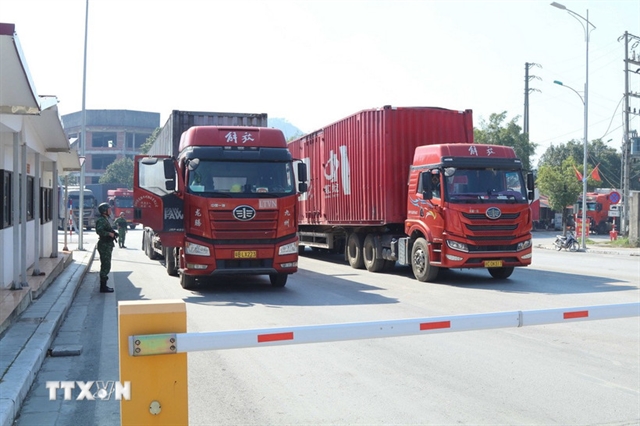
Vehicles wait for customs clearance to export goods through Lạng Sơn. VNA/VNS Photo Quang Duy
A year-long pilot of two-way cargo transport between Việt Nam and China will begin this month at the Hữu Nghị–Youyiguan border gate, a move officials say is designed to cut transport costs and ease pressure on customs clearance.
According to the Đồng Đăng–Lạng Sơn Border Gate Economic Zone Management Authority, from December 10, the two sides will launch trial operations of two-way cargo transport via dedicated routes and clearance lanes at Việt Nam’s Hữu Nghị and China’s Youyiguan international border gate. The pilot will run until December 9, 2026.
Under the scheme, vehicles taking export goods to the neighbouring country will be allowed to carry import cargo on their return journey after completing delivery.
The Hữu Nghị–Youyiguan international border gate pair covers the dedicated cargo transport routes in the 1119–1120 marker area (Hữu Nghị–Youyiguan), the 1088/2–1089 marker area (Tân Thanh–Pò Chài) and the clearance lane in the 1104–1105 marker area (Cốc Nam–Lũng Nghịu).
The pilot is expected to streamline vehicle flow and simplify document checks, helping lower transport costs and boost customs clearance capacity.
To ensure smooth two-way operations, the Đồng Đăng-Lạng Sơn Border Gate Economic Zone Management Authority requires enterprises involved in import and export transport to declare and register their transport needs with Border Guard and Customs at the border gate.
Vehicles involved in two-way transport must carry out transshipment and cargo handling at designated yards that meet inspection and storage requirements under the law and comply with regulations set by the relevant authorities on both sides.
After completing delivery procedures, participating vehicles may park in the yards of the neighbouring country for no more than 36 hours. Vehicles not joining the scheme must leave the country within 24 hours of finishing delivery.
The authority said goods carried in each direction must belong to a single enterprise or cargo owner. For agricultural products, only one type of commodity per vehicle is allowed. Electronic components and other goods must be transported in standard containers or vehicles that meet the technical safety requirements of each side. Mixed-load vehicles will not be permitted during the pilot phase.
The Border Gate Management Centre under the Đồng Đăng-Lạng Sơn Border Gate Economic Zone Management Authority will act as the focal agency for the pilot. In the initial period, the centre will support enterprises from both sides in sharing information on vehicles and goods to coordinate related procedures. — VNS