







Gwadar Port
Geopolitical shifts, disruptions, and conflicts are reshaping the global shipping landscape, paving the way for the emergence of new ports that offer alternative operational hubs. These changes are prompting the industry to diversify trade routes and adapt to evolving logistical and economic challenges.
Container News mapped some specific ports that are about to play a significant role in the near future, each one for different reasons, as the complexities of global trade lead to new realities.
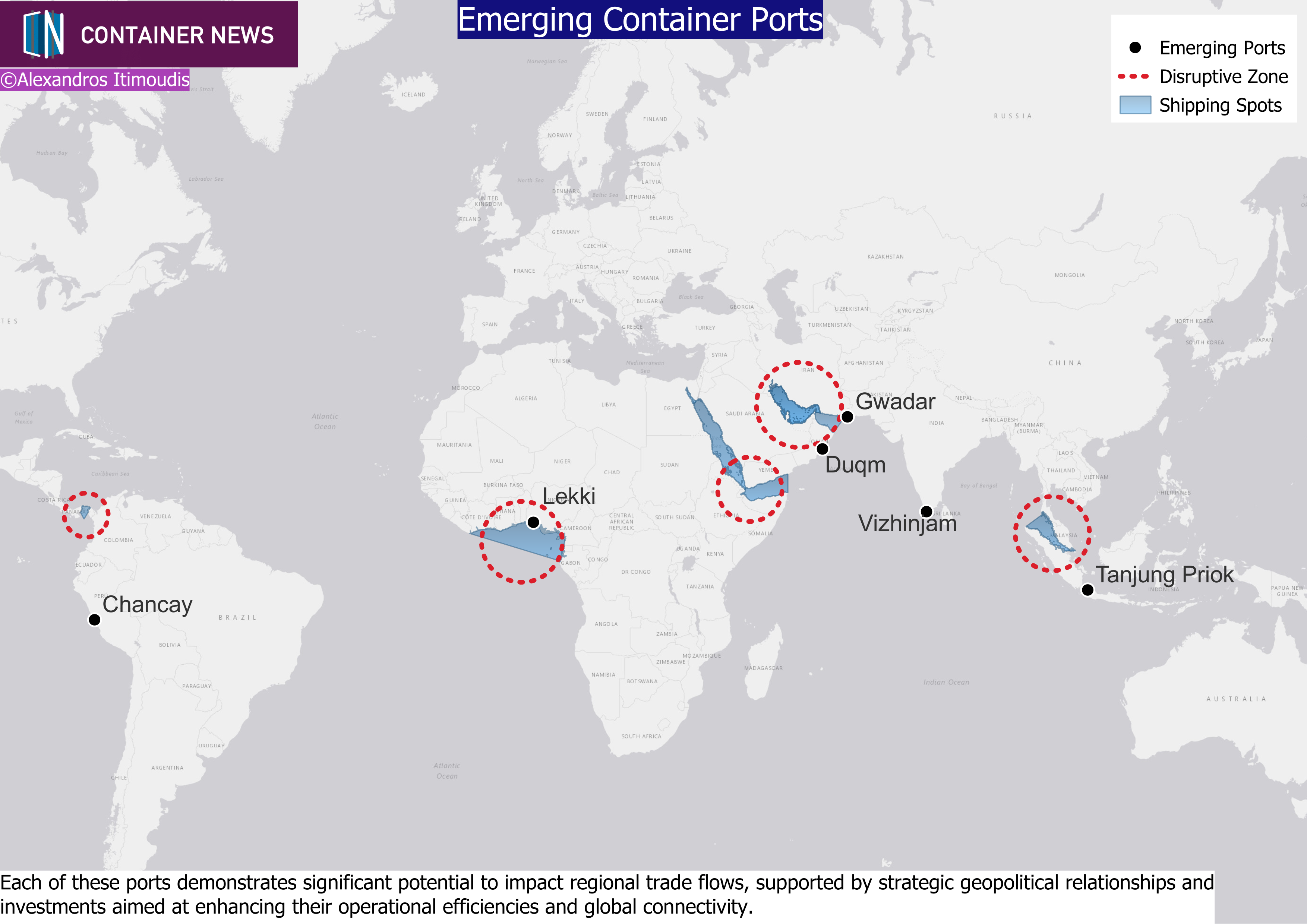
Considering the factors of proximity to chokepoints, business environment, operational efficiency, lack of competitors, and geopolitical importance, several container ports emerge as new important players in the global maritime landscape.
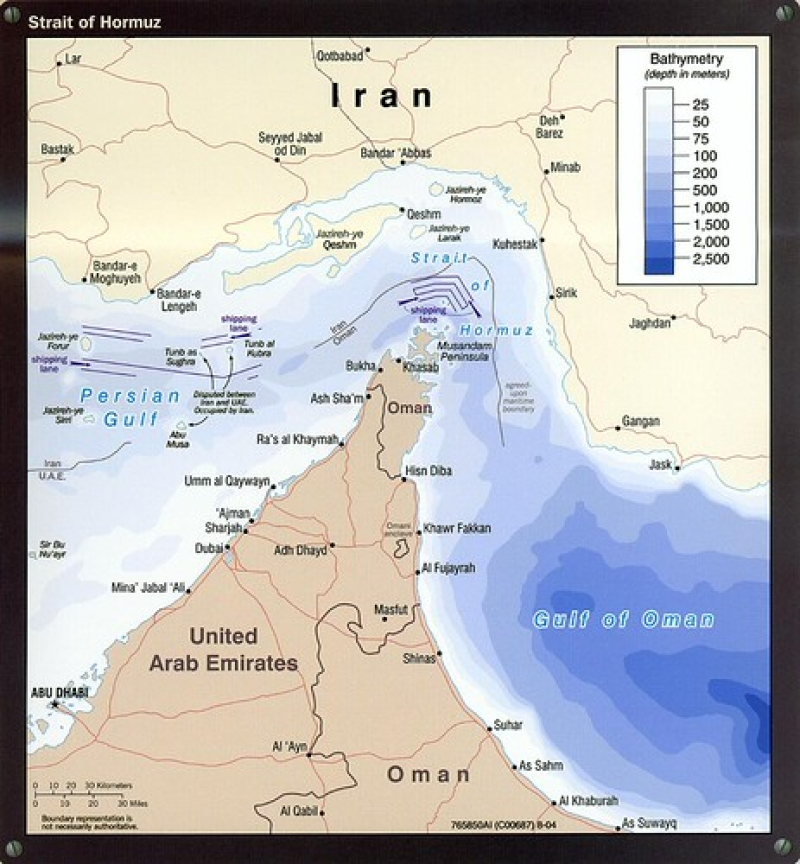
Port of Duqm, Oman – Located strategically on the southeastern coast of Oman, near the Strait of Hormuz, the Port of Duqm offers a critical transit point that avoids the congested Strait. The port’s development is supported by strong governmental backing and investment, making it a business-friendly environment with growing operational capabilities.
Lekki Port, Nigeria – This deep-sea port in Lagos is set to transform the maritime landscape in West Africa. Given its location and lack of direct competitors in the region, along with significant investment in infrastructure and technology, Lekki Port is poised to become a major hub for trade in and out of Africa.
Port of Gwadar, Pakistan – Gwadar serves as a key pivot in the China-Pakistan Economic Corridor, directly connecting to significant trade routes in the Arabian Sea. The geopolitical importance of the port is enhanced by Chinese investment, aiming to develop it into a fulcrum of trade between Asia, the Middle East, and Africa.
Port of Chancay, Peru – As part of China’s Belt and Road Initiative, the Port of Chancay is emerging as an important Pacific gateway for South America. Its proximity to the Panama Canal enhances its strategic significance, providing a less congested alternative with modern facilities and strong business incentives.
Vizhinjam Port, India – Located near the southern tip of India, this port is expected to capitalize on its proximity to international shipping routes that bypass the crowded Straits of Malacca and Suez Canal. The state-backed project aims to establish a major transshipment hub in the Indian Ocean. The latest information about Vizhinjam Port’s performance suggests that during the first two-and-a-half months of its operations, it handled around 25,000 TEUs.
Tanjun Priok, Indonesia – Strategically positioned as the main gateway to Indonesia’s bustling economy, Tanjung Priok has been continuously upgrading its infrastructure to manage increasing volumes more effectively. The port features advanced facilities and has implemented various technological innovations to streamline operations and reduce congestion.
With ongoing developments, Tanjung Priok is set to enhance its competitiveness within the regional maritime industry, aiming to become a major transshipment hub in Southeast Asia.
As of the first half of 2024, the Tanjung Priok port in Indonesia reported a container throughput of approximately 5.4 million TEUs.
Vizhinjam and Chancay ports currently lack connectivity data, while Tanjung Priok is a well-established port in comparison to the others, so the following graph includes the connectivity metrics of Duqm, Lekki and Gwadar ports.

Source: UNCTAD
The graph suggests that the re-routing caused by the ongoing Red Sea crisis has likely benefited the port of Lekki more significantly compared to other emerging hubs. As shipping routes adjust in response to disruptions in the Red Sea, Lekki seems to have capitalized on the situation, attracting greater traffic and strengthening its position in global trade networks.
As these emerging ports evolve, their roles in facilitating more efficient and resilient trade routes will likely grow in importance, benefiting not just local and regional economies, but also global trade networks. The strategic development of these ports is essential for adapting to the shifting dynamics of global commerce, where factors like geopolitical disruptions and changing supply chains can create both challenges and opportunities.
By enhancing infrastructure, improving connectivity, and diversifying service offerings, these ports can help mitigate disruptions and contribute to the broader resilience of international trade. This evolution is vital for the long-term adaptability of the global supply chain, ensuring that emerging ports play an increasingly significant role in maintaining the flow of goods worldwide.