






The conclusion of a conflict is often followed by a period of reflection on who ‘won’, which generally means which protagonist benefitted the most.
In the curious case of the Middle East war it seems the winner, at least politically and in pure economic terms, is a country that never fired a shot – China – as its exports continue to grow while America’s economy and influence appears to be tanking.
Shipbroker Braemar’s latest weekly market report makes it clear there is no meltdown in the market, with global volumes up 1%, China’s port volumes are up 3.5%, the rest of Asia, 2%, while Europe virtually flatlines at 0.5% and the US has nosedived nearly 5%.
“While the rest of the world treads water or slides backwards, China's port system is accelerating. That is not a rounding error. That is not base effects. That is a trade machine that refuses to follow the script that Western analysts keep writing for it,” said Braemar.
It is, perhaps, not the outcome that the US administration was aiming for, but an increase in intra-Asia activity has boosted income, while transatlantic trade has weakened, leaving the lines shuffling capacity to shore up rates.
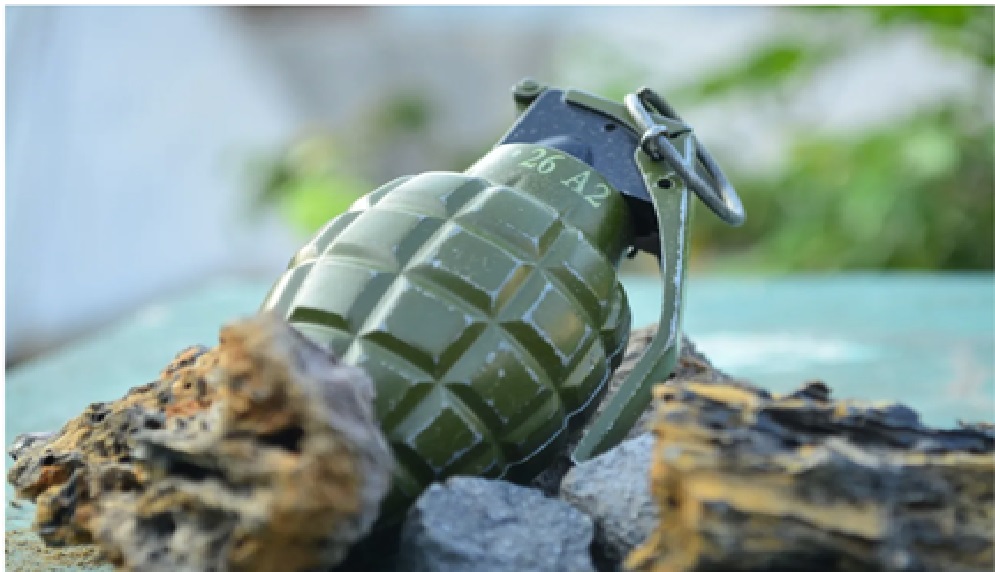
Effectively, “The US-Israeli war on Iran, which began in late February, has thrown a live grenade into global energy and shipping markets,” added Braemar.
Shifting economic fortunes are being accelerated by political missteps in the US in what has become a battle between two super-powers, one that has helped shaped the global economy since 1945, the other reshaping trade as it expands its economic, political and military base.
Former German foreign minister Joschka Fischer argued in Project Syndicate this week that Donald Trump’s recent visit to Beijing demonstrated America’s waning powers in the face of the Xi Jinping, who presently heads the world’s most dynamic economy.
“American credibility has been dealt yet another serious blow,” wrote Fischer, who contrasted Trump’s weakened demeanour with Xi’s more assured performance.
“Almost as soon as Air Force One had touched down,” said Fischer, Xi emphasised the strategic reality, “Warning Trump of the ‘Thucydides Trap’: the tendency of a waning hegemon to overreach in trying to hold down an emerging challenger (the dynamic that dragged Athens and Sparta into the Peloponnesian War).”
Attempts to arrest the decline of US hegemony are not borne out by the hard economic facts said Braemar.
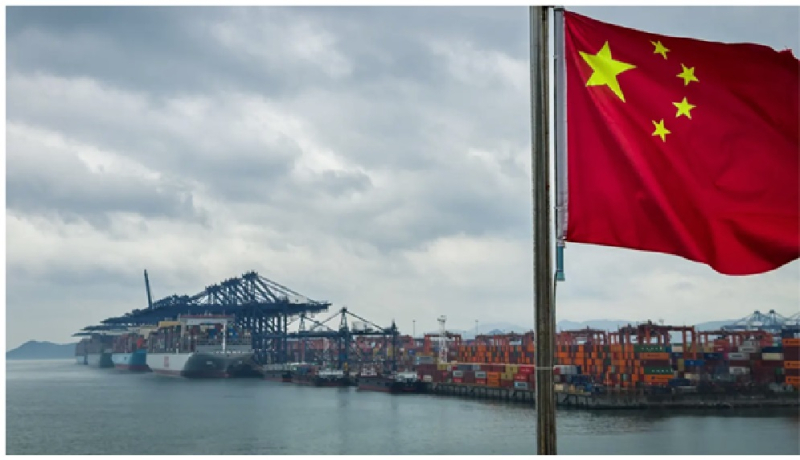
Shanghai is the undisputed global port leader, handling 4.7 million teu in March alone, but Ningo-Zhoushan’s Q1 performance caught the shipbroker’s eye with a nearly 15% increase in volumes year-on-year to 11.55 million teu.
Expanding Chinese exports is not an anomaly, said Braemar, neither is it “Marginal volumes chasing marginal opportunities”.
Instead, the shipbroker said manufacturers have been planning for three years for this moment, having read the market and the western political runes clearly.
“Chinese exporters are not waiting around to find out how bad it gets. The pivot toward developing economy markets, Southeast Asia, Africa, Latin America, the Gulf periphery, has been underway for years and is now accelerating,” said Braemar.