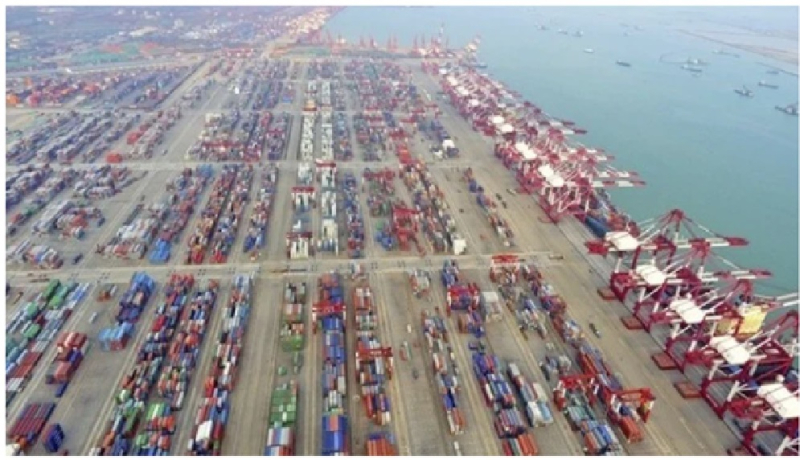








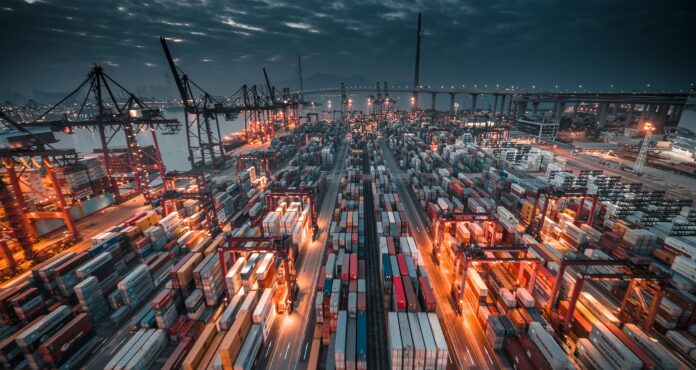
Chinese manufacturers produce more than 90% of the world’s standard dry shipping containers the steel boxes that carry the bulk of global merchandise trade.
That concentration has drawn renewed scrutiny following a US Department of Justice indictment filed in May 2026, which alleges that four of the largest Chinese container makers colluded to restrict output and fix prices during the COVID-19 pandemic.
The superseding indictment, unsealed in the Northern District of California, names China International Marine Containers, Singamas Container Holdings, Shanghai Universal Logistics Equipment, and CXIC Group Containers.
Prosecutors allege that senior executives from these firms met at CIMC’s Shenzhen headquarters in November 2019 and agreed to limit production through coordinated factory controls, output quotas, and financial penalties for companies that exceeded agreed levels. Surveillance cameras were reportedly installed across production lines to monitor compliance.
China’s share of global container manufacturing did not emerge solely from private enterprise.
Decades of state-backed industrial policy, subsidized credit, and preferential land and energy costs helped domestic firms scale rapidly and undercut foreign competitors. By the early 2000s, producers in South Korea, Europe, and elsewhere had largely exited the market. CIMC alone accounts for roughly half of global output.
The indictment, however, is a criminal antitrust case focused on alleged cartel behavior not a finding about industrial policy. The DOJ’s theory is that executives of competing firms coordinated in ways that violated US competition law, regardless of the broader industrial context in which those firms operate.
Whether the restrictions were primarily driven by private profit motives or reflected broader coordination with government interests remains an open legal and analytical question. The indictment does not allege direction by the Chinese state.
The indictment is part of a wider US policy turn toward scrutinizing Chinese influence across maritime supply chains.
A 2025 USTR Section 301 investigation concluded that China’s maritime industrial strategy posed economic and national security risks, pointing specifically to container manufacturing alongside shipbuilding, port equipment, and intermodal chassis.
Legislative proposals including the SHIPS for America Act and the port fee framework have sought to encourage domestic alternatives and reduce single-source dependencies.
The concentration in container manufacturing means that any significant supply disruption whether from market behavior, trade restrictions, or other factors has few immediate substitutes.
Building alternative capacity outside China would require years of investment and face significant cost disadvantages.
That reality is now prompting importers, logistics operators, and governments in the United States, Europe, and Japan to assess their exposure and consider diversification options, though no major alternative production base has emerged to date.