



How record tanker orders, Russia’s Arctic corridor, and the EU’s 21st sanctions package converge into a single structural thesis for commercial shipping.
Taken individually, each tells a familiar story market exuberance, sanctions pressure, a Russia workaround. Taken together, they describe something more significant: the moment commercial shipping stopped adapting to geopolitical bifurcation and began locking it in.
At Posidonia in Athens, the mood was unmistakable. Shipowners have placed orders for 262 VLCCs supertankers capable of hauling 2 million barrels of crude each surpassing the prior record set in October 2008. Rates have doubled from pre-conflict levels, at times reaching all-time highs.
The Iran war has been, by any measure, enormously profitable for Western-compliant tanker owners.
The warning echoes 2008, when an identical surge seeded the next downturn. But there is a structural difference this time: owners are not merely chasing rates. They are replacing capacity the sanctioned shadow fleet has removed hundreds of vessels from the compliant market. The average VLCC age is the highest since 1998.
The ordering cycle is, in part, a structural response to a structurally degraded fleet.
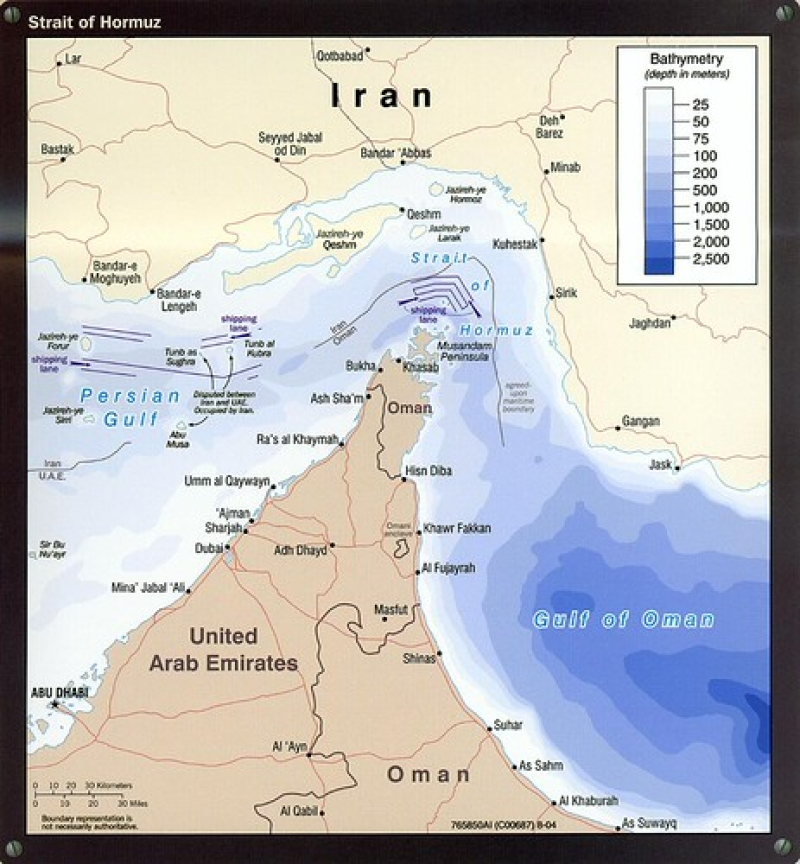
What matters analytically is what the orders assume: that Hormuz disruption is durable, not episodic. Every keel laid is a bet that the crisis continues.
On June 8, the icebreaking LNG carrier Christophe de Margerie passed through the Bering Strait, completing a rare early-season eastbound transit of Russia’s Northern Sea Route in 13 days. The cargo from the sanctioned Arctic LNG 2 project was bound for China’s Beihai terminal via a floating storage transfer off Kamchatka.
The transit was 40% slower than a standard summer run, but still vastly faster than the southern alternative via Africa and the Indian Ocean. Two sister Arc7 vessels are under construction at Zvezda and expected before year-end.
If all three are operational, limited winter navigation along the NSR becomes technically feasible for the first time transforming what was a seasonal corridor into a near-permanent export channel.
The NSR is no longer a workaround but a parallel system one that operates outside Western insurance frameworks, Western port infrastructure, and increasingly Western legal jurisdiction.
On June 9, the European Commission unveiled its 21st Russia sanctions package. The measures are the most structurally ambitious to date: 30 additional shadow fleet vessels listed (bringing the total to 662), for the first time extending sanctions to enablers bunkering providers, service vessels and new restrictions on the sale of LNG tankers to Russia, mirroring earlier oil tanker controls.
One measure stands out as a direct convergence signal: a proposed temporary freeze on the oil price cap adjustment mechanism. The stated rationale is explicit Hormuz-driven price shocks must not be allowed to generate windfall revenues for Moscow.
The EU has formally linked the two crises in a single legal instrument. The Hormuz disruption and the Russia sanctions architecture are no longer parallel policy tracks. They are now the same track.
What these three signals reveal, in combination, is that the commercial shipping system is not moving toward bifurcation.
The Western-compliant fleet is expanding via a historically unprecedented newbuild cycle, capitalizing on the freight premium generated by the removal of sanctioned tonnage.
The sanctions-resilient Russian corridor is hardening via Arctic infrastructure that operates beyond the reach of those same sanctions. And the sanctions architecture itself is tightening in ways that accelerate both trajectories simultaneously.
These are not tactical positions but infrastructure commitments as the bifurcation of commercial shipping is being written into steel and once built, the architecture will outlast the crises that produced it.