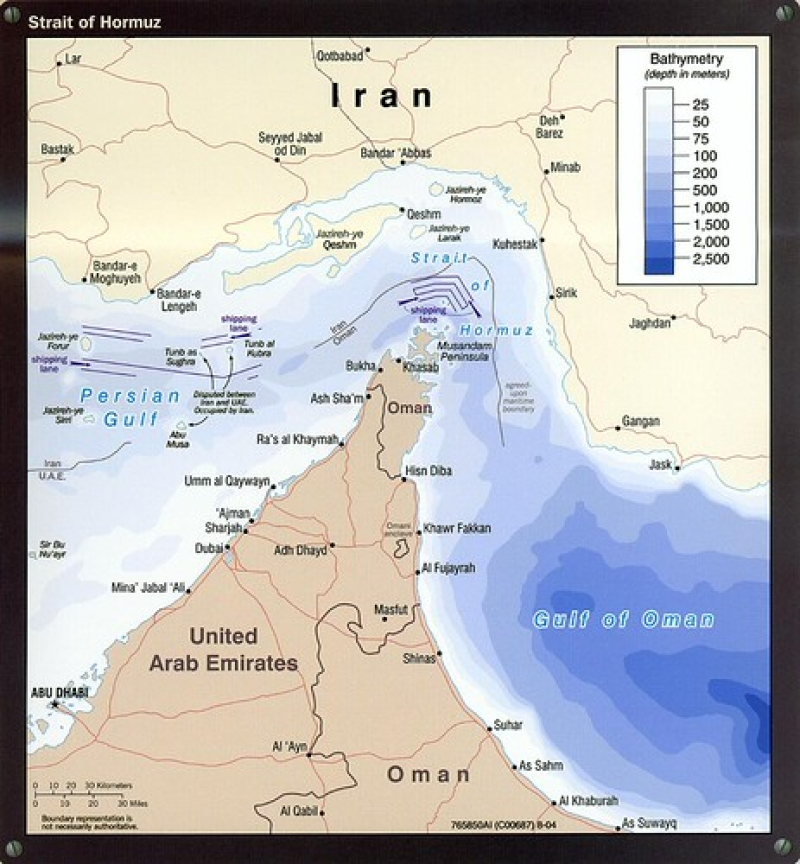







The closure of a shipping lane no longer begins with a missile. It begins with an underwriter.
Across the Strait of Hormuz, the Red Sea and the Black Sea, the same sequence now repeats: reinsurers and protection-and-indemnity clubs withdraw cover, and within roughly 72 hours a corridor is commercially shut long before military assessment or commercial planning has caught up.
Four patterns, now converging
Four patterns run through the current disruption, and they have stopped running in parallel. Insurance primacy means cover, not combat, decides which corridors stay open.
Tollbooth extraction means the threat is monetised rather than enforced: Novorossiysk’s night-transit ban and Ukraine’s corridor stoppage show time-windowed sovereignty replacing a binary open-or-shut status.
The third pattern is a normalization deficit.
De-escalation does not restore routing Maersk’s move from Chornomorsk to Constanța has outlasted the premium spike that prompted it.
The fourth is a concentration effect: cargo does not disappear, it consolidates at ports perceived as exogenous to the threat, multiplying hubs and feeder demand rather than destroying volume.
Europe sits at the end of every damaged route
Europe is the demand terminus of all three degraded corridors at once not in sequence.
That removes the possibility of hedging: an operator cannot offset Bab al-Mandeb exposure with Black Sea trade, because both price off the same London reinsurance layer.
That layer is itself European-domiciled, which turns the disruption for EU and Greek owners into a question of capital cost and insurability rather than freight rates.
Three consequences follow over the next 12 to 36 months.
A permanent risk spread on Asia–Europe cargo will survive de-escalation, leaving European trades structurally disadvantaged against Pacific-facing ones.
Fleet bifurcation by political alignment makes European-flagged and European-owned tonnage the highest-value target, shifting risk from the corridor onto the ownership structure.
And the collapse of Suez transit revenue weakens Egyptian public finances a political-risk loop on the Mediterranean’s eastern approach that few operators have priced.
The mediterranean becomes a dead end
The basin has inverted from through-corridor to terminal sea, entered mainly from the Atlantic. The divergence is already measurable: western Mediterranean hubs have captured 5–25% growth while Piraeus contracted 7.8%.
This is geography repricing, not competitive failure.
Morocco’s Tanger Med and Nador West Med complex is moving toward roughly 40% of western Mediterranean transshipment capacity by 2027, separating the transshipment function from the European gateway function.
Piraeus, Alexandria, Mersin and Limassol are drifting from mainline calls toward feeder and gateway roles, fed by Gulf cargo re-routing through Saudi Red Sea ports. Energy sourcing is tilting Atlantic-ward, concentrating FSRU risk on a handful of nodes.
And with schedule reliability at 53–60% basin-wide, buffer capacity not transit time has become the traded variable.
Where the money moves next
The openings are structural rather than cyclical. Feeder and short-sea tonnage in the eastern Mediterranean and along the Red Sea coast is in demand, though capped by the same insurance architecture that created it.
Carriers offering fixed all-in rates with war risk absorbed become de facto insurance intermediaries, claiming a margin pool underwriters hold today.
Multi-port discharge optionality and dual-node contracts monetise the concentration effect directly, while Nador, Atlantic-Iberian and Adriatic nodes extend the Fujairah logic westward.
Counter-UAS retrofits, electronic-warfare fitting and salvage capacity look like a standing market rather than an episodic one, and ownership or flag structuring has become legitimate risk mitigation under fleet bifurcation.
The signal to watch
One indicator matters above the rest: whether reinsurance capacity contracts across two theatres simultaneously.
That is the trigger that converts difficult conditions into the volume paradox cargo that must divert, and commercially cannot move.