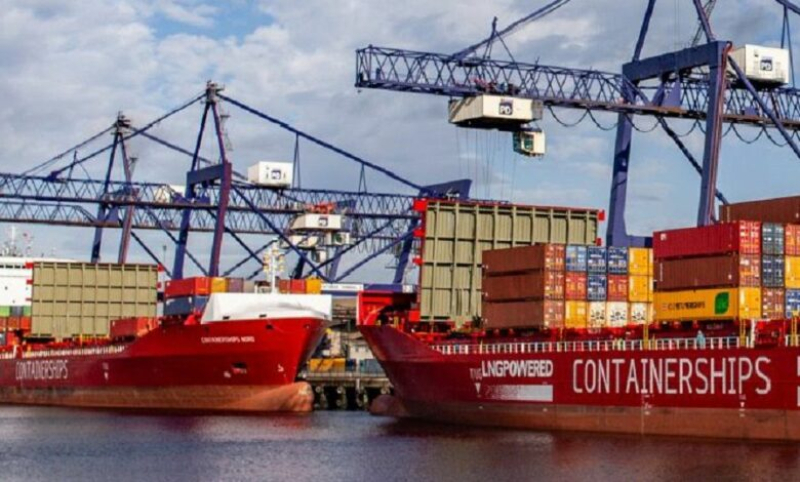








📈 Dry bulk shipping continues to play a vital role in international trade, transporting large volumes of raw materials used in manufacturing, energy production, and agriculture worldwide.
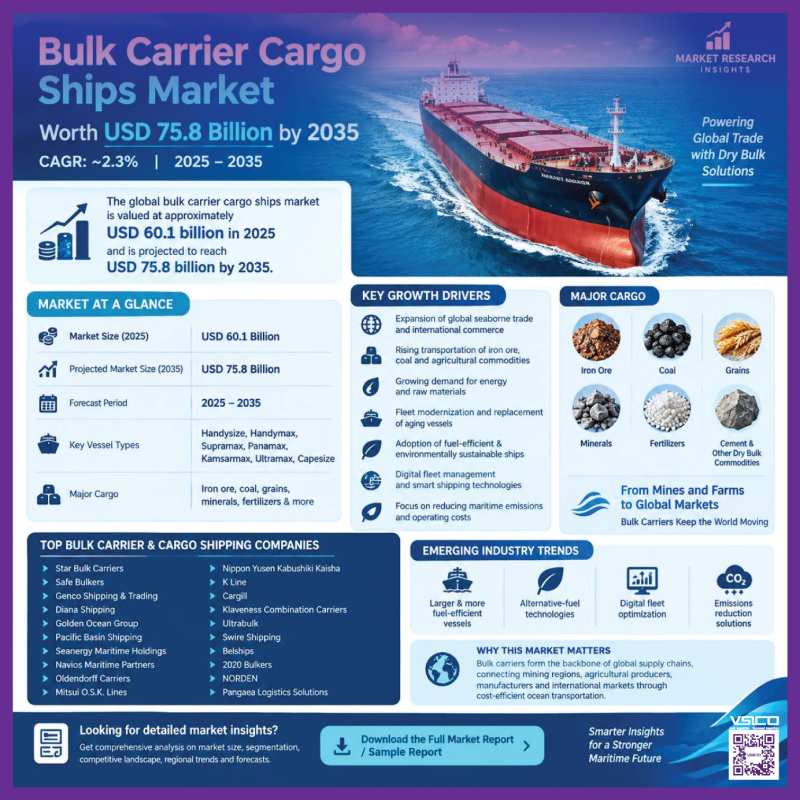
According to Market Research Insights, the global dry bulk shipping market was valued at an estimated USD 60.1 billion in 2025 and is projected to reach USD 75.8 billion by 2035, growing at a compound annual growth rate (CAGR) of approximately 2.3% over the 2025–2035 period.
The market encompasses various vessel segments, including Handysize, Handymax, Supramax, Panamax, Kamsarmax, Ultramax, and Capesize, serving diverse transportation needs for iron ore, coal, grain, minerals, fertilizers, construction materials, and other bulk commodities.
📈 KEY GROWTH DRIVERS:
⚓️ Expansion of global maritime trade and international commerce.
⚓️ Rising demand for the transportation of iron ore, coal, grain, minerals, fertilizers, and cement.
⚓️ Replacement of aging vessels with newer, more fuel-efficient ships.
⚓️ Adoption of digital technologies in fleet management to optimize operations and reduce operating costs.
⚓️ Growing pressure to reduce emissions, driving investment in alternative fuel technologies and environmentally friendly vessels.
🌱 INDUSTRY TRENDS TOWARD 2035:
The dry bulk shipping industry is expected to focus on four key areas: developing larger and more fuel-efficient vessels, adopting alternative fuels, digitalizing fleet management, and reducing CO₂ emissions.
Overall, by 2035, competitiveness in the dry bulk shipping industry will depend not only on fleet size but also on fuel efficiency, operating costs, digital management capabilities, and the ability to adapt to fluctuations in global trade. With the market projected to grow at approximately 2.3% annually, competitive advantages will increasingly depend on operational efficiency and the timing of fleet investments, rather than simply expanding fleet size.
Note: The figures above are forecasts by Market Research Insights and have not been independently verified. Market size should also not be confused with maritime freight revenue or the value of secondhand vessel sales and purchases (S&P).
Source: Market Research Insights