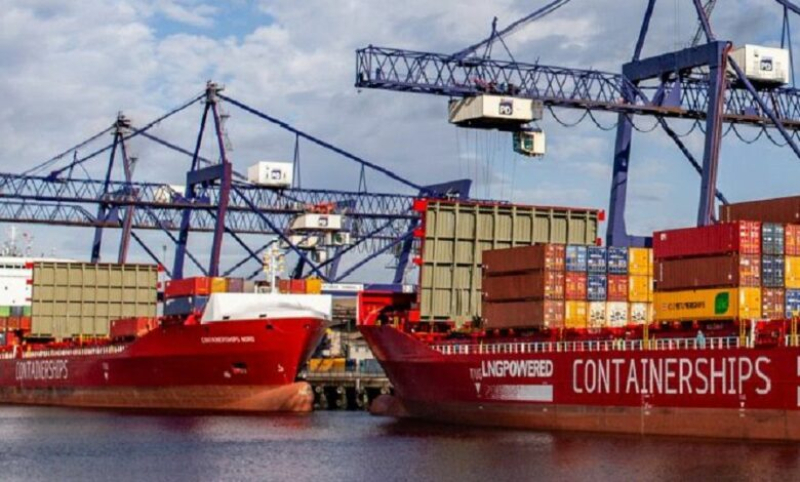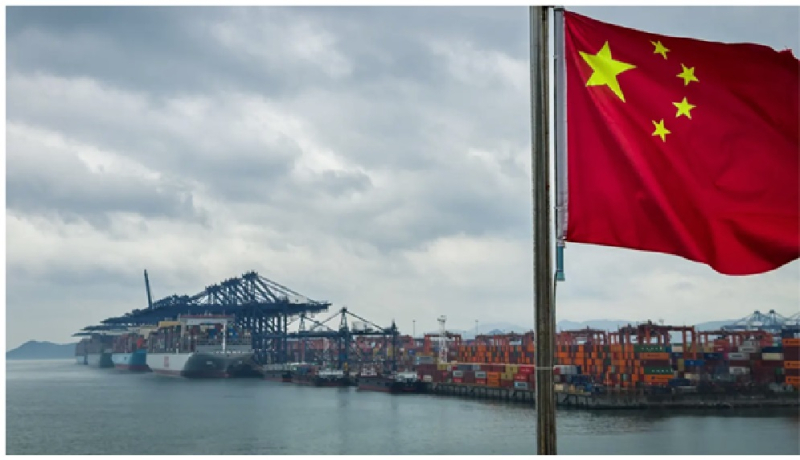







Rates for shipping containers from east Asia and China to the US were mixed this week but continue to face upward pressure amid congested Asia ports and persistent demand, evidenced by rate increases set for 1 October.
Global container shipping major CMA CGM will implement a peak season surcharge (PSS) of $4,000/FEU (40-foot equivalent unit) on all cargo from Asia Pacific and India to both US coasts effective 1 October.
Container rates on the transpacific remain at the highest since mid-2022, with prices for containers to the West Coast between $6,585/FEU (40-foot equivalent unit) and $7,750/FEU, and rates to the East Coast are between $8,750/FEU and $11,000/FEU.
Rates from supply chain advisors Drewry were up by 2% week on week from Shanghai to Los Angeles and by 1% from Shanghai to New York, as shown in the following chart.
Drewry said there have been eight blank sailings announced for next week, up from seven this week, indicating tighter capacity.
Rates from online shipping marketplace and platform provider Freightos fell by 1% to the West Coast and by 3% to the East Coast.
Judah Levine, head of research at Freightos, said carriers are paying higher costs for fuel as rates have trended higher since the collapse of the ceasefire in July.
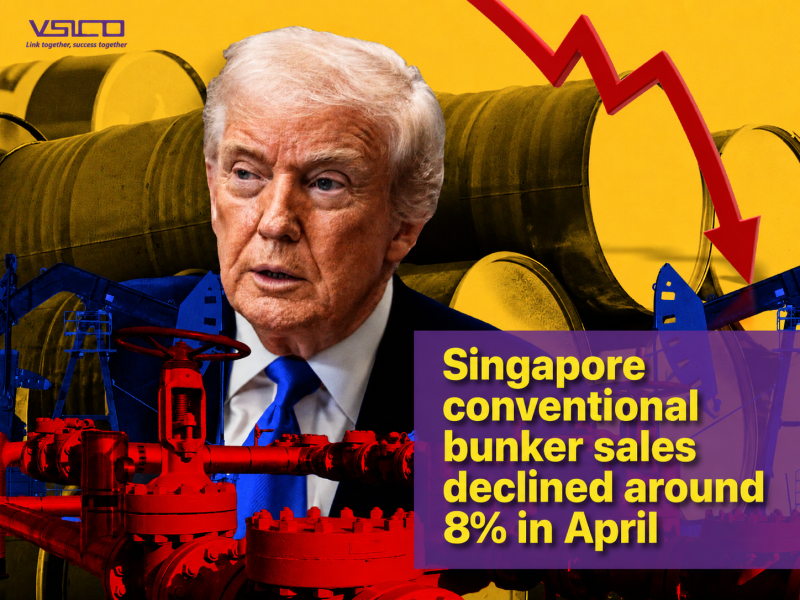
“Recent escalations as well as an increase in Chinese crude imports have pushed bunker fuel prices back up to levels last seen in June,” Levine said. “Climbing fuel costs are likely setting an elevated floor for container rates, but ocean prices are still largely being driven by demand trends and disruptions to capacity availability.”
Levine said he does not expect rates to continue rising after the slight decreases this week but said elevated demand that started in late May has kept prices at peak levels since early July.
Levine also pointed to congestion at Asian ports as providing support for the elevated rates.
Rates on the Shanghai Containerized Freight Index (SCFI), which tracks rates for containers leaving Shanghai, rose by 2%, the seventh weekly gain in a row.
Rates on the NYSHEX Freight Index (NYFI) rose by 3.5% to the West Coast and by 8.6% to the East Coast.
Container ships and costs for shipping containers are relevant to the chemical industry because while most chemicals are liquids and are shipped in tankers, container ships transport polymers, such as polyethylene (PE) and polypropylene (PP), which are shipped in pellets. Titanium dioxide (TiO2) is also shipped in containers.
They also transport liquid chemicals in isotanks.
PANAMA CANAL POSTPONES DRAFT RESTRICTIONS
The Panama Canal Authority (PCA) has postponed a scheduled draft reduction originally set to occur on 1 October and will allow customers to continue operating under the existing 14.63m(48ft) tropical freshwater limit.
The PCA said the decision follows the latest review of water levels in Gatun Lake and weather projections.
Gatun Lake is the lake that provides the water necessary to operate the canal’s locks, which lift and lower ships between sea level and lake level.
The US is the largest user of the Panama Canal.
In 2024, 52% of transits through the canal had ports of origin or destinations in the US. More than 76% of the cargo that transited the canal had the US as its origin or destination.
The Panama Canal remains the primary route for trade between Asia and the US Gulf and East Coast.
LIQUID TANKER RATES
US chemical tanker freight rates assessed by ICIS were largely unchanged this week but saw some increases on the India trade lane as this route has recently been experiencing an uptick in spot inquiries, and rates continue to be pressured higher.
Space has tightened, which in turn has prompted owners to push rates higher.
However, the usual products moving along this route have not stopped but there has been a noticeable decrease in activity in certain products such as caustic soda.
Market wise, the US Gulf (USG) to Asia route was unchanged again this week – especially for the larger parcels. Most owners are still waiting for contract nominations for the balance of September and October, leaving partial space possibly available. If this trend continues it could push rates lower.
Overall, the market was rather quiet as available space remains limited; however, inquiries were also rather quiet leaving only a few reported fixtures. The usual parcels of methanol were seen fixed this week.
From the USG to Europe, there has been little activity this week and steady contract volumes continue to be seen in the market. However, on the spot side it remains somewhat active as several traders have inquired about space as caustic soda and styrene continue to dominate this trade lane. Although the number of fixtures remain somewhat limited, leaving the market unchanged week on week.
Along the USG to Brazil trade lane the market seems a bit balanced. Spot space for smaller parcels appears available right now and COA (contract of affreightment) volumes remain steady, supporting the market overall.
However, the market was quiet this week as most market participants await the outcome of the war in the Middle East. A few cargoes of styrene were seen quoted in the market.
Freight rates are now expected to remain relatively flat for the time being as space seems to be available and offers seem to have disappeared.
Bunker fuels were higher this week following the climb in energy, following an escalation in tensions in the Middle East.