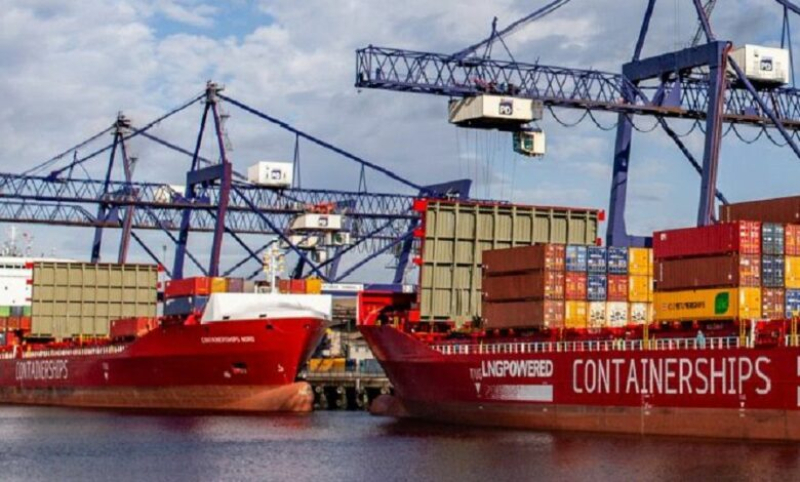








Soaring Pacific and Atlantic rates offset declining Asia to Europe spot as rate levels approach Covid peak, while schedule reliability heads south.

Credit: Filip Filipovic via Pixabay
Schedule reliability has taken a significant turn for the worse as container spot rates soar for cargo calling at US ports according to the latest Xenata data.
Global schedule reliability is down to 29.4% with the best performer the Gemini Cooperation at 51.8%, still well below its stated aim of over 90%, and the least reliable the Premier Alliance at 15.8% with the Ocean Alliance at 27.7% and MSC at 26%.
Peter Sand, senior analyst at Xeneta, said: “Average spot rates from the Far East to the US East Coast continue their ascent following the outbreak of conflict in the Middle East in February, climbing a further 25% since early July.”
East coast rates increased 1.6% week-on-week, reaching an incredible $10,910 per feu, while cargo heading to the US West Coast also saw an increase in rates of 2.5% taking average spot rates to $7,496 per feu.
Since the outbreak of the Iran war on 28 February spot rates have soared a staggering 289% to the West Coast and 305% to the East Coast from the Far East and 95% up for freight from North Europe.
Sand believes that further upward pressure will apply in the coming weeks as the early October Golden Week approaches.
A view that is only partially supported by Drewry Shipping Consultants who point to the six blank sailings that have been announced on the US trades for the week beginning 6 September, twice as many as the previous week.
Less capacity “With resilient demand and continued capacity management by carriers, Drewry expects freight rates to remain stable next week,” said Drewry in what is a cautious view.
Schedule reliability, has however, declined markedly with global averages down 3.3% since July, with Gemini, which is the best performer, falling 9.8% in that time, Ocean and Premier Alliances declining by 4.5% and 3.3% respectively and MSC 1.1% in the same period.
European rates out of the Far East are increasing but the market is far less dynamic, with 111% and 61% increases in rates since 28 February, and average rates at $4,532 per feu and $5,073 per feu to North Europe and the Mediterranean respectively.
Sand commented that delays due to the peak typhoon season in Asia has impacted on-time performance to Europe the most – down from 47% in mid-June to just 3% by the end of July, and Far Eastern freight to North America falling from 38% to 19% over the same period.
“But even at its 30-month high, global schedule reliability impressed no one, said Sand, “It is a strange contradiction witnessed during every major market shock - the more a shipper must pay, the poorer the service.”