






Dr Katherine Sinclaire, senior medical advisor, aviation and maritime at MedSea (International SOS), writes for Splash today.
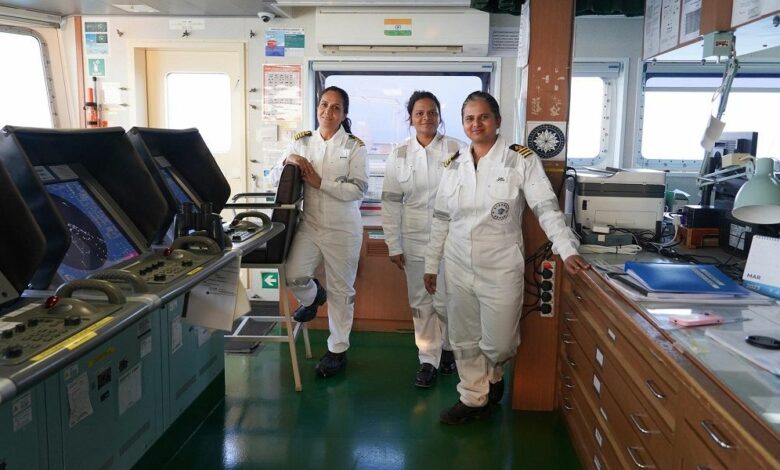
Women at sea remain a small but growing part of the global maritime workforce, facing unique medical and psychosocial challenges that demand industry-wide attention. Despite progress in gender inclusion, only 1.2% of seafarers are women, and many still encounter discrimination, inadequate facilities, and limited career support.
According to the IMO Women in Maritime programme, women make up just 1.2% of the global seafaring workforce, or roughly 24,000 seafarers, though this represents a 45.8% increase since 2015.
The IMO-WISTA 2024 survey confirms that women remain underrepresented in technical and leadership roles, with most employed in cruise and passenger sectors.
Psychosocial challenges onboard
1. Discrimination and Bias
Gender and nationality discrimination remain widespread. A Global Maritime Forum survey on Employability in Maritime, found that 29% of women identified gender bias as a major obstacle to employment, compared to 0.4% of men. Women often report needing to outperform male peers to gain respect or promotion and are frequently assigned less technical tasks.
2. Harassment and Safety
Sexual harassment and bullying are among the most severe issues. The STCW Code amendments, effective from January 2026, now require mandatory training on preventing and responding to violence and harassment, including sexual assault. Despite this progress, many women still feel unsafe in male-dominated environments, with underreporting common due to fear of retaliation.
3. Isolation and Lack of Support
Women often sail as the only female onboard, leading to social isolation and loneliness. Gossip and power abuse can exacerbate stress, while limited access to mentorship or peer networks deepens the sense of vulnerability. The IMO’s Women in Maritime Associations (WIMAs) aim to address these challenges by fostering regional support networks and professional development opportunities.
4. Family Separation and Maternity
Extended contracts and limited maternity provisions often force women to choose between career progression and family life. Few companies offer flexible sea-shore rotation programmes, and childcare responsibilities remain a significant barrier to retention within the industry.
Medical and physical health considerations
1. Insights from Maritime Medical Cases
Operational medical data reflects the growing presence of women at sea and provides valuable insight into their healthcare needs. Almost 3% of cases opened by MedSea (Large Private Telemedicine Assistance Services under International SOS)in 2025 were for women, representing an increase of more than one-third compared with previous years, highlighting the industry’s continued efforts to increase female participation in seafaring roles.
Analysis of medical presentations shows a higher proportion of urological and gynaecological cases among women than among men. Notably, only 6% of female cases were related to musculoskeletal conditions, significantly lower than the 15% observed in male seafarers. Other common medical categories, including dental conditions and injuries, were represented at broadly similar rates in both women and men.
The data also suggests positive operational outcomes. Cases involving women required less frequent referral ashore, and the repatriation rate for women was half that seen in men, indicating that many conditions could be effectively managed onboard or through telemedical support.
2. Facilities and Hygiene
Many vessels still lack dedicated accommodation, bathrooms, and changing areas for women. Access to female sanitary products can be inconsistent, and poorly fitting personal protective equipment (PPE) increases the risk of injury. The 2022 Maritime Labour Convention amendments now require appropriately fitting PPE for all genders, marking an important step towards safer and more inclusive working conditions.
3. Reproductive and Sexual Health
Limited privacy and medical support can make managing menstrual health and contraception challenging. In emergencies, telemedical providers must be prepared to address gynaecological issues, pregnancy complications, and sexual assault care sensitively and confidentially. Ensuring access to appropriate advice and follow-up care remains a critical component of maritime healthcare.
4. Mental Health
Isolation, harassment, and a lack of representation can contribute to anxiety, stress, and depression among women seafarers. Companies are increasingly encouraged to implement psychological support systems, including confidential reporting mechanisms, peer-support programmes, and access to mental health professionals through telemedicine services.
Toward a more inclusive future
Progress is underway. The IMO and WISTA partnership, the All Aboard Alliance’s pilot programmes, and ICS/ITF guidance on eliminating shipboard harassment are helping to drive cultural change across the maritime sector. However, sustainable improvement will require continued commitment to:
Gender-sensitive medical protocols within maritime telehealth services.
Mandatory anti-harassment training and effective enforcement measures.
Improved onboard infrastructure that supports privacy, dignity, and hygiene.
Career development pathways, sponsorship, and mentorship opportunities for women officers.
Flexible employment policies that better support family responsibilities and maternity needs.
Conclusion
Women at sea face intertwined medical and psychosocial challenges that reflect broader systemic inequities within the maritime industry. While encouraging progress has been made, significant barriers remain to achieving a truly inclusive and supportive working environment.
Addressing these issues is not only a matter of fairness but also of operational safety, crew wellbeing, and workforce sustainability. As maritime medicine continues to evolve, integrating gender-specific health considerations, robust psychosocial support, and inclusive workplace practices will be essential in ensuring that the oceans become a workplace where all seafarers can thrive.