







Manufacturing activity across much of Asia strengthened in July as improving demand, rising output and easing inflationary pressures at the time supported factory activity in several export-oriented economies.
- China July manufacturing PMI falls below 50, indicating contraction
- Inflation pressures generally eased across major Asian manufacturing economies
- Mideast tensions continue disrupting supply chains and logistics
Regional manufacturing bellwether China bucked the trend, with purchasing managers index (PMI) in July snapping five months of expansion.
In northeast Asia, South Korea logged a higher PMI number in July from June, while Taiwan and Japan PMIs dipped month on month but remained high at 54-55 levels.
South Korea continues to lead Asia’s manufacturing recovery, supported by strong semiconductor exports and AI-related demand. Its semiconductor exports nearly tripled to $41.0 billion in July, the second-highest monthly
total on record, official trade data showed on 1 August
ASEAN manufacturing PMI rose to 52.8 in July from 50.5 in June, with Vietnam and Thailand recording stronger expansion, according to US financial services firm S&P Global which compiles the PMI index via surveys with manufacturing companies.
“The ASEAN manufacturing sector appears to have moved past the softer patch seen between March and June,” said S&P Global economist Maryam Baluch, adding that manufacturers were the most optimistic about future output in more than three years.
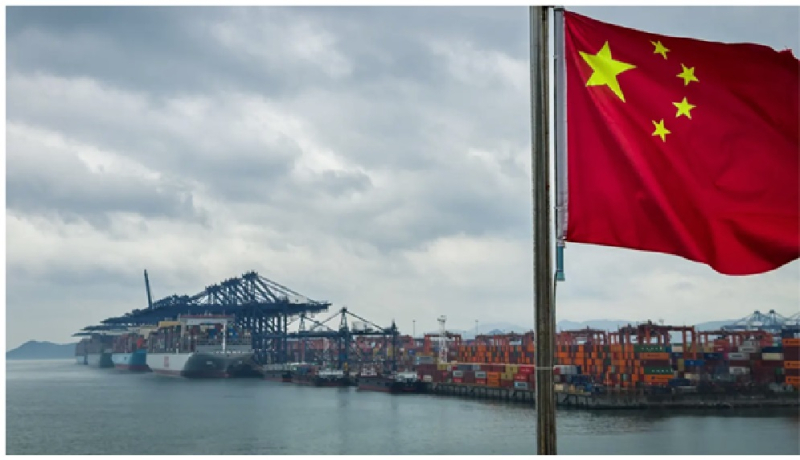
The improving picture in Asia contrasted sharply with China, whose official manufacturing PMI fell to 49.2 in July from 50.3 in June, slipping below the 50-point threshold that separates expansion from contraction.
Among other China PMI sub-indexes, output fell to 49.9 from 51.4, new orders declined to 48.5 from 51.2; and new export orders slipped back into contraction at 49.6 from 50.1.
Economists said the deterioration underscored persistent weakness in domestic demand and renewed concerns over the growth momentum of the world’s second-biggest economy in the second half of the year.
“The softening in industrial activity is particularly concerning, as policymakers have been relying on external demand and export growth to offset the prolonged weakness in domestic demand,” said Ho Woei Chen, economist at UOB Global Economics & Markets Research.
Elsewhere in Asia, demand conditions were generally improving.
Lower global oil prices in July helped ease inflationary pressures, with Brent crude falling by about 20% over the month as concerns over Middle East supply disruptions eased and oil flows through the Strait of Hormuz recovered, reducing energy-related costs across Asia.
Vietnam’s PMI rose to 52.9 from 51.8 as output, orders and exports accelerated; while Thailand’s PMI increased to 54.2 from 53.6 on stronger domestic demand and rising production.
South Korea also contributed to the region’s improving manufacturing picture. The country’s PMI rose to 53.1 in July from 52.1 in June, marking one of the strongest improvements in its operating conditions over the past four years.
Output and new orders both expanded at faster rates, supported by stronger demand from the semiconductor and automotive sectors. New export orders returned to growth for the first time in three months, posting the fastest increase since April 2021.
South Korea experienced a “stronger improvement in operating conditions” entering the second half of the year, with strength particularly coming from semiconductors and autos, S&P Global economist Usamah Bhatti said.
Bhatti added that firms increased hiring and purchasing activity in response to rising production requirements, while some were building inventories to guard against raw material price increases and supply disruptions linked to the Middle East conflict.
Vietnam saw “softening inflationary pressures and an improving demand environment” in July, according to S&P Global’s economist Andrew Harker, adding that manufacturers were increasingly able to win new work from overseas markets where growth had previously been subdued.
In Thailand, firms reported better pricing power amid improving order books.
“There are signs that the healthy demand environment is allowing [Thai] firms to make some improvement to profit margins,” S&P Global economist Phil Smith said.
Japan and Taiwan continued to outperform much of the region. Japan’s PMI eased marginally to 54.5 from 54.8, while Taiwan’s edged down to 55.1 from 55.2, both remaining firmly in expansion territory.
Japanese manufacturers continued to benefit from strong technology-sector demand.
“Companies [in Japan] often commented that the improvement coincided with greater global demand across the key semiconductors industry, while some firms commented on growth in AI-related areas of manufacturing,” S&P Global’s economist Annabel Fiddes said.
In Taiwan, supply constraints remained evident despite robust demand.
“Taiwan’s manufacturing economy continues to boom, even as the PMI survey data clearly point to supply-side constraints,” S&P Global economist Joe Hayes said.
Malaysia lagged its ASEAN peers, with its PMI unchanged at 50.7. While new orders rose at the fastest pace in eight months and export demand improved, employment fell and business confidence weakened.
“Overall growth momentum remained limited,” said S&P Global economist Maryam Baluch, citing softer output growth, falling employment and geopolitical uncertainty.
China’s PMI downturn in July added a note of caution to the broader regional picture.
Both manufacturing and non-manufacturing PMIs had fallen into contraction territory, signalling that the recent macroeconomic slowdown could extend into the second half of the year, said Lynn Song, chief economist for Greater China at Dutch financial services firm ING.
The weakness is likely to reinforce expectations for additional policy support after China’s Politburo recently pledged more measures to boost domestic demand, accelerate infrastructure spending and strengthen counter-cyclical support for the economy.