







🌍 US-BOUND FREIGHT RATES COOL – EUROPE-BOUND ROUTES SHOW MIXED TRENDS
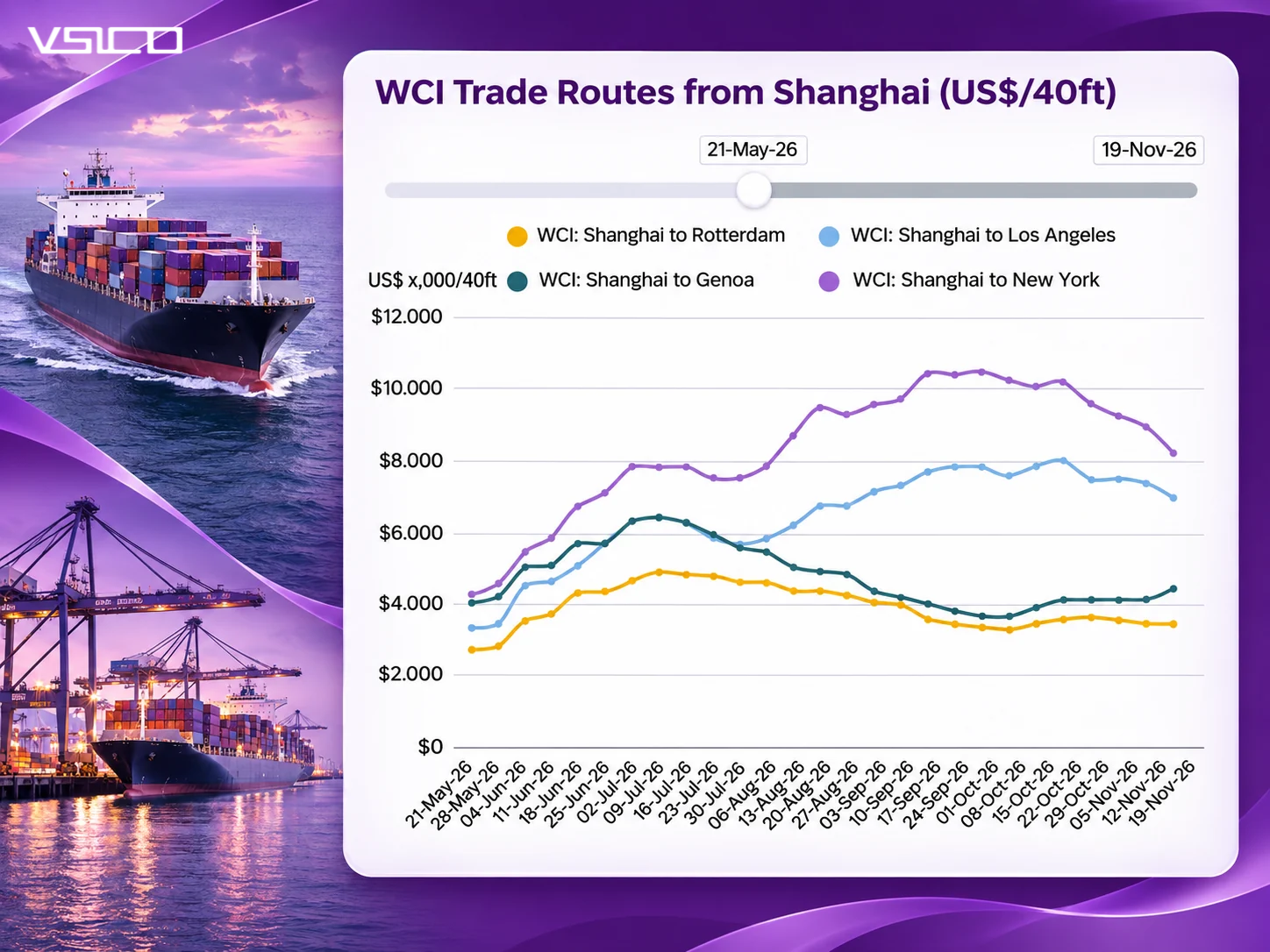
The World Container Index (WCI) chart from May 21 to November 19, 2026, reveals a clear divergence in container freight rates from Shanghai across major shipping routes. Following a period of sharp increases, US-bound freight rates declined toward the end of the period, while rates to Genoa recovered and Rotterdam remained relatively stable.
📌 KEY HIGHLIGHTS BY ROUTE
🔹 Shanghai – New York: Ended the period at approximately USD 8,200 per 40-foot container, the highest among the four routes. Freight rates declined significantly from their peak of over USD 10,000 recorded in September–October.
🔹 Shanghai – Los Angeles: Closed the period at approximately USD 7,000 per 40-foot container, below the peak of nearly USD 8,000 in October. Rates showed a downward trend in the final weeks.
🔹 Shanghai – Genoa: After peaking at approximately USD 6,400 in July, freight rates fell to USD 3,600–3,700 in early October before recovering to around USD 4,400 per 40-foot container by the end of the period.
🔹 Shanghai – Rotterdam: Ended the period at approximately USD 3,400 per 40-foot container, the lowest among the four routes. Following a peak of nearly USD 4,900 in July, rates adjusted downward and fluctuated within a narrower range toward the end of the period.
📈 MARKET DEVELOPMENTS AND TRENDS
⚓️ Different peak periods across routes: The two European routes peaked around July, while US-bound routes experienced stronger increases during September–October.
⚓️ Mixed movements in the final week: Freight rates to New York and Los Angeles declined, while Genoa recorded an increase and Rotterdam remained largely unchanged.
⚓️ Closing rates remained above initial levels: Despite declining from their respective peaks, all four routes ended the observation period at higher levels than those recorded on May 21, 2026.
💡 MARKET OUTLOOK
Overall, the container freight market is undergoing a correction following a period of strong growth in mid-2026. The New York route continues to command significantly higher freight rates than European routes, reflecting differences in supply-demand dynamics and operational conditions across major shipping corridors. The contrasting movements indicate that the market has yet to establish a consistent trend across all routes. Importers and exporters should closely monitor their respective shipping routes, taking freight rates, vessel schedules and delivery lead times into consideration to proactively manage their logistics plans.
Source: Drewry