







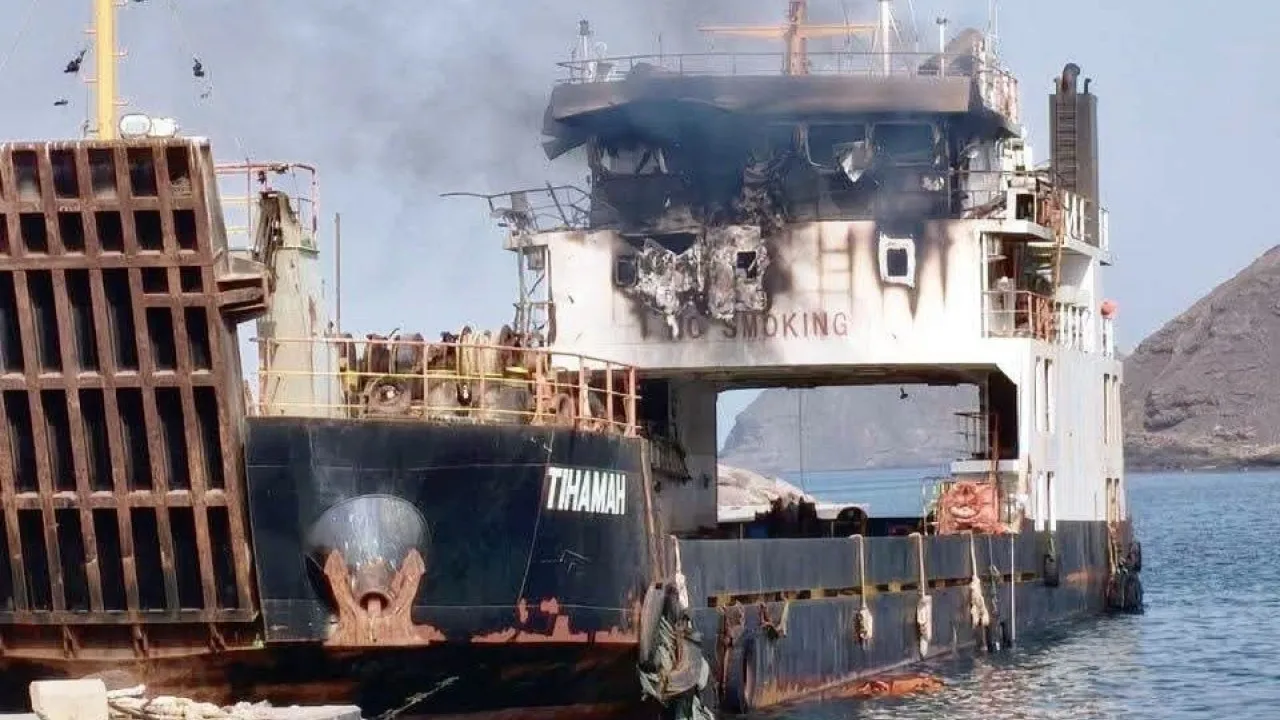
Four seafarers and two Yemeni personnel were killed in an attack on Tihamah blamed on the Houthis by Yemen’s government.
The International Maritime Organization’s (IMO) secretary-general Arsenio Dominguez has reiterated his call for ship owners and operators to thoroughly assess risks in the Middle East in the wake of the fatal attack on Tihamah.
The Tanzanian-flagged general cargo ship was hit around 5 nm from Al Mokha off the Yemen coast in the Red Sea. After an initial strike, the vessel was hit again as rescuers were evacuating the ship. Local authorities claim the ship was hit by three missiles in total.
Yemen’s internationally-recognised government blamed the attacks on the Houthi, the Yemeni rebel group currently enforcing a blockade on Saudi Arabia-linked shipping in the Red Sea.
Yemen’s Coast Guard said four crew members were killed, three Pakistani and one Indonesian national, as well as two members of Yemen’s armed forces. Seven of the ship’s crew, two members of the coast guard and a member of the armed forces were injured.
“While Coast Guard and armed forces teams were conducting rescue and evacuation operations, the Houthi militia launched another missile at the ship, targeting the rescue operation site, resulting in casualties and injuries among the forces participating in the response operation," the Coast Guard said.
Around three hours after the attacks, the Coast Guard reported a Houthi remote-controlled surface vessel was intercepted while attempting to approach Tihamah.
Yemen’s Ministry of Foreign Affairs condemned the attack, saying the ship was carrying food supplies for Yemeni people.
“It is with sadness and regret to know that, once again, innocent seafarers have lost their lives in an indefensible attack on international shipping. I offer my deepest condolences to the families of those involved,” said Dominguez.
“It is particularly troublesome that the most recent attack has taken place in the Red Sea and Gulf of Aden area. I reiterate my call for shipowners and ship operators to thoroughly assess risks before transiting this and other regions and follow appropriate best management practices.”