






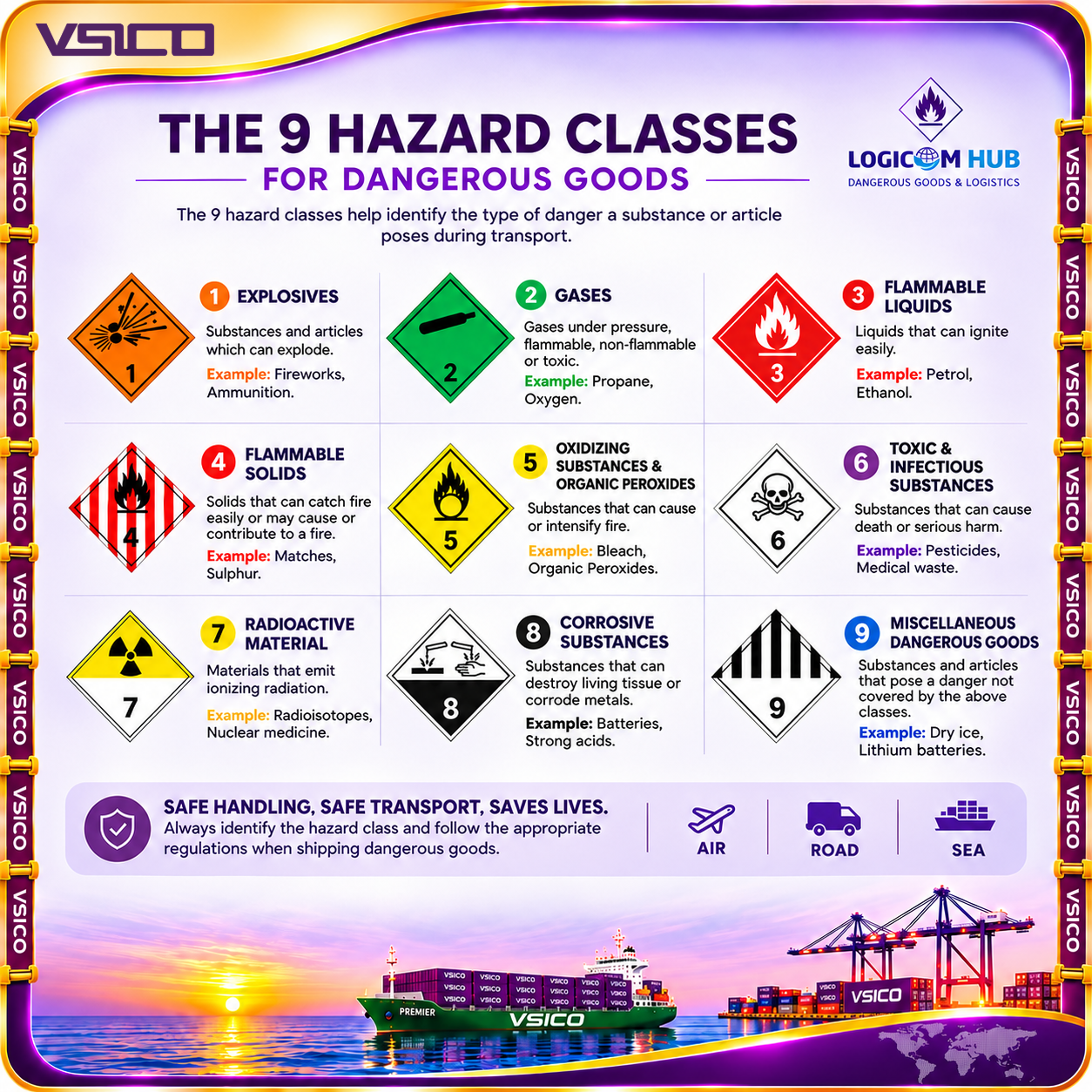
In logistics and international transportation, dangerous goods (DG) are classified into nine classes under international regulations to ensure safety during storage, handling, and transportation by sea, air, and road.
📌 THE 9 CLASSES OF DANGEROUS GOODS INCLUDE:
🔹 Class 1 – Explosives
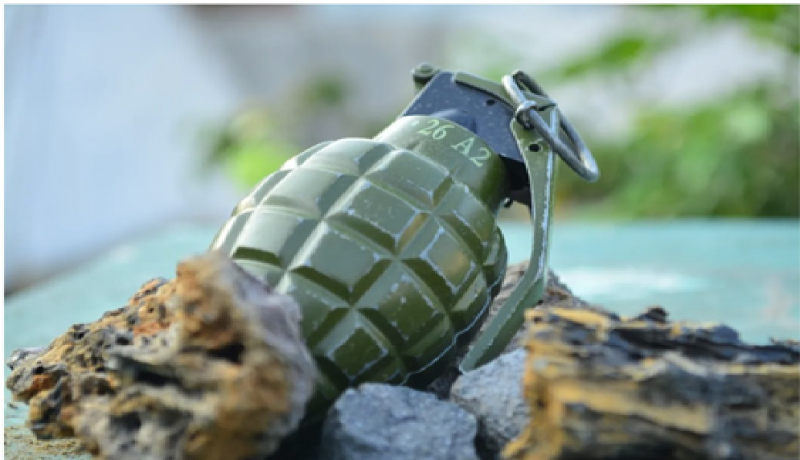
Substances or articles capable of exploding due to impact, friction, heat, or chemical reactions, such as fireworks, ammunition, and explosive materials. This class presents significant risks and requires strict controls on packaging, storage, and transportation.
🔹 Class 2 – Gases
Includes compressed gases, liquefied gases, flammable gases, non-flammable gases, and toxic gases, such as propane and oxygen. Major hazards include fire, explosion, leakage, asphyxiation, and poisoning.
🔹 Class 3 – Flammable Liquids
Liquids that can easily ignite, particularly when exposed to heat or sparks, such as gasoline, ethanol, and industrial solvents. The primary risks are rapidly spreading fires and the release of flammable vapors.
🔹 Class 4 – Flammable Solids
Includes readily combustible solids, self-reactive substances, substances liable to spontaneous combustion, and substances that emit flammable gases upon contact with water. Examples include matches, sulfur, and certain highly reactive chemicals.
🔹 Class 5 – Oxidizing Substances & Organic Peroxides
Substances capable of promoting or intensifying combustion, including industrial oxidizing agents and organic peroxides. They are particularly hazardous when exposed to combustible materials or high temperatures.
🔹 Class 6 – Toxic & Infectious Substances
Includes toxic chemicals and biological agents capable of causing disease, such as pesticides and infectious medical waste. These substances can pose serious risks to human health and the environment.
🔹 Class 7 – Radioactive Material
Materials that emit ionizing radiation, potentially causing cellular damage and long-term health effects. Examples include radioactive isotopes and materials used in nuclear medicine.
🔹 Class 8 – Corrosive Substances
Substances capable of destroying living tissue, causing chemical burns, or corroding metals, such as strong acids, strong alkalis, and certain industrial chemicals.
🔹 Class 9 – Miscellaneous Dangerous Goods
Includes substances and articles that pose hazards during transportation but do not fall under the other eight classes, such as dry ice and lithium batteries. This class is particularly relevant to modern container shipping and logistics.
📦 Industry Note: The nine-class classification system follows the United Nations Recommendations on the Transport of Dangerous Goods. In practice, dangerous goods are further identified by divisions, UN numbers, and specific transportation requirements. For maritime transportation, compliance with the International Maritime Dangerous Goods (IMDG) Code is essential. Classification alone is insufficient to determine whether different dangerous goods can be safely packed together in the same container.
💡 Industry Insight: Dangerous goods classification plays a critical role in risk management across maritime transportation and logistics, helping prevent fires, explosions, chemical leaks, environmental pollution, and losses of life and property. Lithium batteries (Class 9), in particular, require increasing attention as shipments of electronic devices and electric vehicles continue to grow. Proper hazard identification, accurate declaration, and compliance with packaging, labeling, and segregation requirements are essential not only to protecting vessels, crews, and cargo but also to minimizing fire and explosion risks, environmental damage, financial losses, and supply chain disruptions.
Illustration source: Logicom Hub
Reference: UNECE – United Nations Recommendations on the Transport of Dangerous Goods.