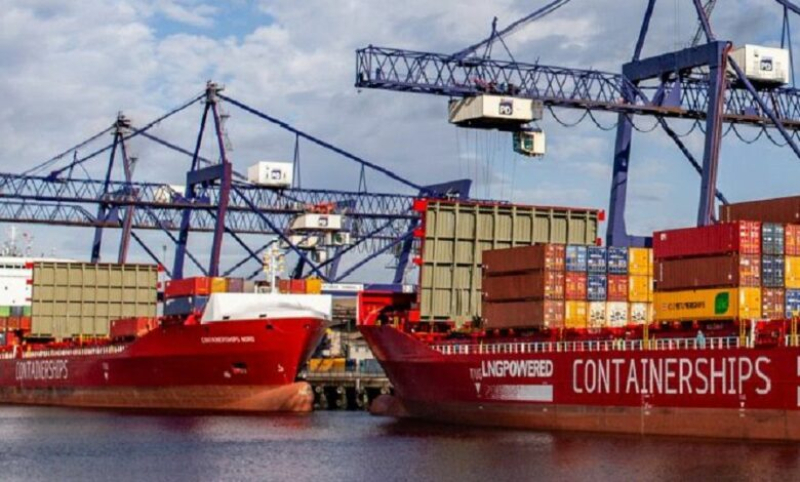







Persistent port congestion is effectively removing around 1.7m teu of containership capacity from the global market, an amount approaching the size of Evergreen’s entire fleet, according to new analysis from Sea-Intelligence.
The Copenhagen-based consultancy said its latest Global Liner Performance report shows little sign that liner schedule reliability is improving, with June 2026 performance continuing to hover around 60% to 65%.
Before the pandemic, carriers typically achieved schedule reliability of between 70% and 80%.
The deterioration is not simply about more ships arriving late. The ships that are delayed are also being held up for considerably longer.
Sea-Intelligence data shows that in the years before the pandemic a late vessel typically arrived three to four days behind schedule. The new normal appears to be around five to five-and-a-half days.
Combining the proportion of delayed ships with the length of those delays allows Sea-Intelligence to calculate how much fleet capacity is effectively tied up and therefore unavailable to shippers.
In June, delays absorbed approximately 5% of the global container fleet.
During the comparatively stable 2011-2019 period, around 2.2% of capacity was routinely absorbed by delays, meaning today’s market is running 2.8 percentage points above the historic baseline.
In absolute terms, the current 5% absorption equates to approximately 1.7m teu of containership capacity temporarily removed from effective supply.
Even stripping out the historic 2.2% level of normal disruption leaves around 1m teu of additional capacity being swallowed up by delays — roughly equivalent to the fleet of HMM.
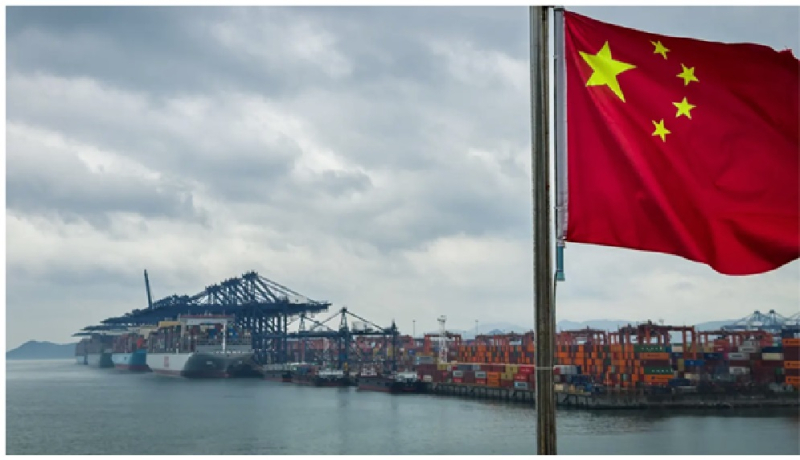
Figures from DHL suggest the amount of containers tied up at congested ports is even higher. An advisory from the forwarder today suggested more than 3.7m teu is piling up at ports across the world, something further strained by typhoons that disrupted operations at key Chinese ports, while strong export demand has created bottlenecks across Asia, with North Asia feeling the impact most acutely.
“For shippers, the second half of 2026 may be less about waiting for normality to return and more about adapting to a market where pressure has become the norm,” said Niki Frank, CEO, DHL Global Forwarding Asia Pacific.
The numbers help explain why container shipping capacity can remain surprisingly tight despite the enormous volume of new tonnage delivered by Asian shipyards in recent years.
Carriers may have considerably more ships on the water, but congestion, disrupted routings and deteriorating schedule performance mean a sizeable chunk of that theoretical capacity is not actually available at any given moment.
Maersk last week raised its full-year guidance again citing widespread port congestion.
CEO Vincent Clerc said, “Strong, broad-based demand from the Far East since 2024 has resulted in significantly more unbalanced trade flows, with volume levels that are challenging landside infrastructure capacity. From ports to inland transportation, we are seeing increased congestion and disruption across multiple geographies.”
Maersk said congestion is now outweighing supply growth as a key driver of freight rates.