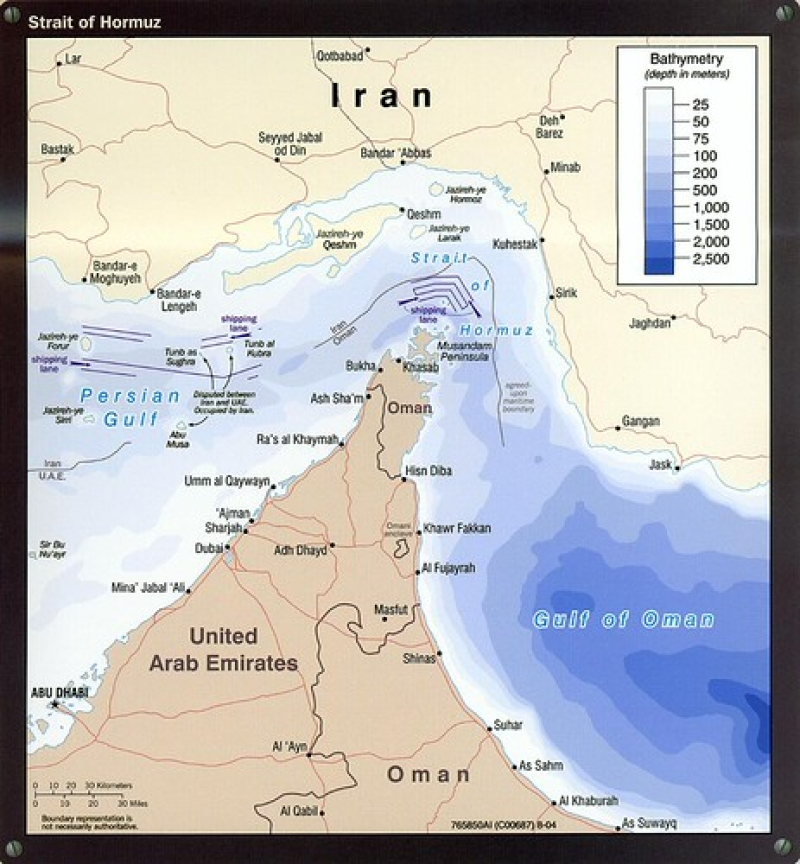







U.S. President Donald Trump has said ships laden with oil are beginning to sail through the Strait of Hormuz.
“They are going along the Southern ’Highway,’ which is totally safe, secure, and pristine. There are other areas of travel, also!!!” Trump said in a social media post.
Trump previously claimed the strait would be reopened after the expected signing of an interim peace agreement between the U.S. and Iran on Friday, suggesting that time was needed for mine-clearing in the vital waterway off Iran’s southern coast that has been effectively shuttered to tanker traffic for months. A longstanding American naval blockade of Iranian ports would be lifted as well, he said.
The comments come after the U.S. and Iranian officials said they had reached a framework agreement which would end a war that has dragged on for more than three months and darkened the outlook for the global economy.
Neither the U.S. nor Iran has offered details about the deal. U.S. Vice President JD Vance said he expects a text of the agreement to be released this week, although he flagged in an interview with CNBC that many details still need to be clarified.
The status of the strait is “the sort of thing that we’re going to figure out” in upcoming technical negotiations, Vance said, adding that waterway will be open toll-free on a long term basis.
“You know that there are a lot of very important details to figure out that we’re actually going to sit at the table and discuss together and figure out a path forward,” Vance noted.
Mehdi Mohammadi, a strategic adviser to the head of Iran’s negotiating team, said the proposed deal preserves and recognizes Iran’s authority over the Strait of Hormuz, according to a Fars report. He said Tehran and Oman would continue collecting fees for safe passage through the strait.
Meanwhile, Iran’s Mehr news agency reported that the agreement will entail the removal of U.S. sanctions on Iranian oil exports and the unfreezing of $12 billion in Iranian funds held abroad. It will also cover reconstruction plans, the report said.
Media reports have suggested that the deal may feature a 60-day period designed to allow for negotiations on Iran’s nuclear program. Trump told The Wall Street Journal that a deal includes an agreement from Iran not to obtain nuclear weapons. But he did not mention this in social media posts on Sunday.
Iran’s cessation of uranium enrichment has been a key demand for Washington, with Trump stressing that Iran should not be allowed to have a nuclear weapon. Tehran has largely maintained its stance that its nuclear program is for peaceful purposes only.
Iranian Foreign Minister Abbas Araghchi has suggested the nuclear issue would be handled in a second phase of talks. The U.S. will resume its attacks on Iran if a nuclear accord is not reached, The New York Times reported.
Stocks jump, oil slips
Global stocks rallied on Monday, while oil prices fell, as investors reassessed the trajectory of inflation and growth should the agreement, which extends a recent shaky ceasefire, hold.
“The announcement of a U.S.-Iran deal has given markets a lift across the board,” analysts at Capital Economics said in a note. Fears have abounded that an energy shock sparked by the closure of the Strait of Hormuz will, in turn, cause an inflationary surge that could persuade major central banks — such as the Federal Reserve — to raise interest rates.
Recent data points have suggested that inflation has accelerated in the U.S., driven largely by a spike in gasoline pump prices. The Fed is tipped to leave rates unchanged after its two-day policy meeting on Wednesday, although bets remain that the central bank could lift borrowing costs in 2026. Wagers at the beginning of the year that the Fed would roll out rate cuts have all but diminished as well.
“The pullback in oil prices should […] please central bankers who have had to consider the effects of elevated energy costs as they play into stubbornly high inflation. But market participants remain alert to the risk that any deal to bring about a permanent end to hostilities could be put into jeopardy by missteps over the coming week,” analysts at Trade Nation, a financial services provider, said in a note.
Leaders from France, Germany, Italy and the United Kingdom urged for shipping traffic in the Strait of Hormuz to resume and a quick finish to detailed negotiations. Trump will be in France this week for a summit of the Group of Seven major economies, with reports suggesting that the discussions are likely to focus on the preliminary U.S.-Iran agreement.